







Invisible Hands: Women’s Critical Role in Agricultural Value Chains
Women play a pivotal yet often unrecognised role across all stages of the agricultural value chain, spanning production, processing, marketing, and distribution. In India and many developing economies of the Global South, women constitute a large proportion of the agricultural workforce as farmers. However, despite this centrality, systemic barriers—including limited access to land, credit, technology, training, and markets—continue to hinder their full participation and empowerment. Strengthening the role of women in agricultural value chains holds immense potential that goes beyond improving productivity, with implications for food security, nutritional outcomes, and rural economic development. This paper examines the multifaceted role of women along the agricultural value chain, identifies the structural challenges they face, and proposes strategies to enable their greater agency and participation to transform agriculture and rural livelihoods.
Attribution: Shoba Suri and Sharon Thawaney, “Invisible Hands: Women’s Critical Role in Agricultural Value Chains,” ORF Occasional Paper No. 526, Observer Research Foundation, March 2026.
Introduction: Making the Invisible Visible
Agricultural value chains—encompassing interconnected stages of production, processing, distribution, and marketing—form the backbone of global food systems. Production involves transforming inputs such as seeds and labour into raw commodities through cultivation and harvesting. Processing includes cleaning, sorting, packaging, and value addition to extend shelf life and enhance marketability. Distribution manages storage, transportation, and logistics, while marketing focuses on branding, pricing, and sales through traditional markets, retailers, and e-commerce platforms. Together, these chains are critical to food security and economic growth, employing approximately 1.23 billion people worldwide—around one-third of global employment. This workforce supports rural livelihoods, stabilises household incomes, and underpins the functioning of food systems.
The importance of agricultural value chains is evident in global production and trade data. For instance, global agricultural trade, as of 2025, is projected to exceed US$2.3 trillion.[1] The OECD-FAO Agricultural Outlook 2025-2034 forecasts a 1.2-percent annual growth in global agricultural and fish production over the next decade, reaching a 14-percent overall increase by 2034.[2] At the same time, technological advancements, including precision farming tools and AI-driven analytics, are accelerating productivity and efficiency, with the global agri-tech market expected to reach US$32.83 billion in 2025 and grow at a 14.22 percent compound annual growth rate (CAGR) through to 2030.[3]
Increasingly, climate change and the greater frequency of extreme weather events are posing massive threats to production, processing, and distribution, and thereby, to overall food security. It disrupts the natural ecosystems that underpin agriculture, degrading soil fertility, altering water availability, and reducing biodiversity, which in turn limits productive capacity. These ecological shocks ripple across the value chain, as crop and livestock losses reduce supply, damage to storage and processing infrastructure increases post-harvest losses, and transportation disruptions hinder distribution. At the market level, these drive price volatility, constrain access to nutritious food, and reduce overall system resilience. A 2023 study found that rising temperatures negatively impact India’s food security, leading to a projected long-term reduction in food production of 1.7 percent for every 1 percent increase in temperature.[4]
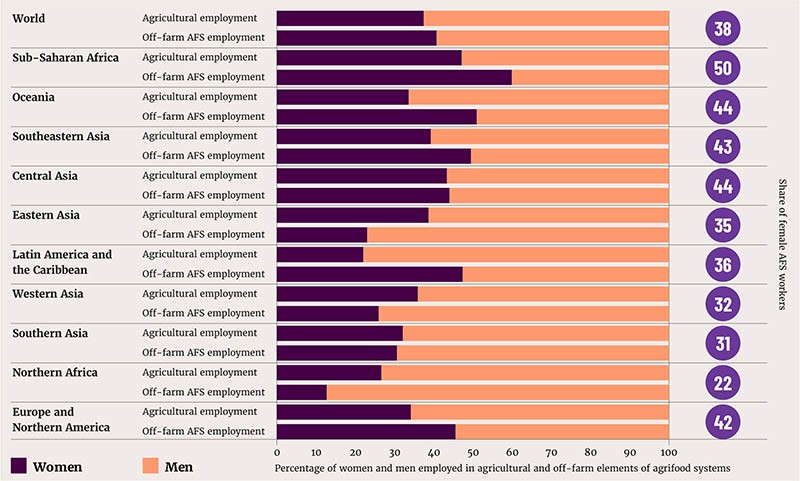
Over the past few decades, women’s participation in agricultural value chains has steadily increased. Globally, women now represent 36 percent of the agricultural workforce, with higher concentrations in developing regions (see Figure 1), with 66 percent in sub-Saharan Africa and 71 percent in Southern Asia.[5]
Figure 1: Employment Share of Women and Men in On-Farm and Off-Farm Agri-Food Systems
 Source: FAO[6]
The overall pattern is seen in Western countries too: for instance, in the United States, the 2022 Census of Agriculture (updated with 2025 analyses) reports 1.2 million female producers, comprising 36.3 percent of all farmers and managing 407 million acres.[7]
Women’s contributions to these value chains, though vital, are systematically overlooked, functioning as “invisible hands” that sustain productivity while accruing minimal benefits. This invisibility is reinforced by institutional arrangements that privilege certain forms of agricultural work over others, most notably through policy definitions of who qualifies as a “farmer”. Although formally gender-neutral, this category is effectively male-centric, as recognition is commonly tied to land ownership, household headship, or control over market-facing production.[8]
In the Global South, where legal and customary land rights are overwhelmingly held by men, women’s labour is consequently classified as auxiliary rather than productive, restricting their access to state support and formal recognition.[9] These exclusions are reflected in wider gender disparities across the sector. The World Economic Forum’s Global Gender Gap Report 2025 highlights persistent disparities, with agriculture ranking among sectors with the widest gaps in economic participation and opportunity.[10] Shaped by gender norms and limited institutional support, women’s contributions remain undervalued across the value chain, resulting in persistent disparities in access to essential resources, such as land, credit, technology, and extension services, with disproportionate consequences for women farmers’ well-being and broader inefficiencies across agricultural systems.[11]
This marginalisation of women in agriculture is deeply entrenched in historical and cultural factors that undervalue their work. The “plough hypothesis” explains how the advent of plough-based farming 5,000 years ago shifted labour dynamics, favouring male physical strength and confining women to secondary, less-recognised tasks like weeding and seed selection—notions that continue to influence contemporary policy frameworks.[12] Colonial legacies further amplified these divides. In Africa and South Asia, European-imposed land tenure systems prioritised male ownership, dismantling matrilineal traditions and marginalising women from formal inheritance rights.[13] In East Asia, Confucian-influenced cultural norms restrict women’s mobility and decision-making, framing their agricultural labour as extensions of household duties rather than economic enterprises.[14] Western histories, such as Britain’s Women’s Land Army during the Second World War, which mobilised 80,000 women temporarily, illustrate how women’s roles were valorised in crises but erased in peacetime, with post-war policies reverting to male dominance.[15]
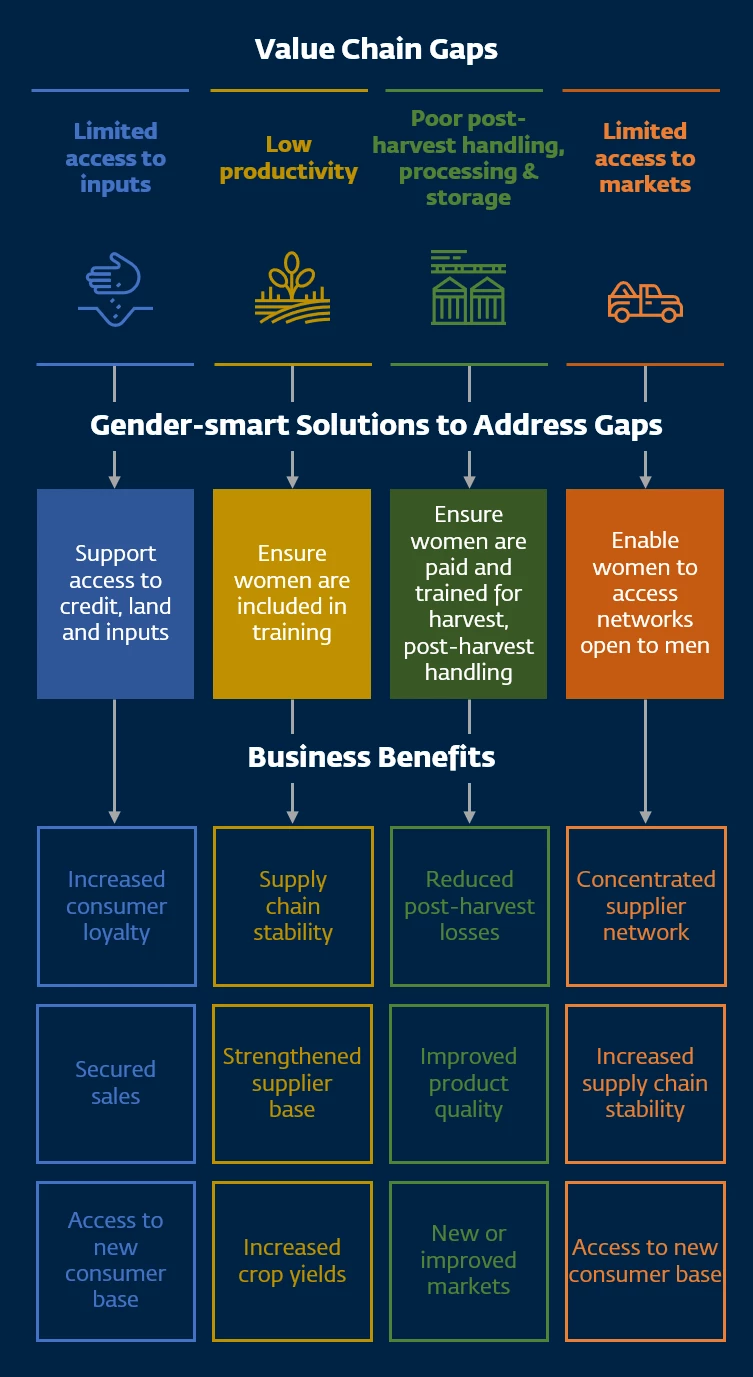
Figure 2 highlights the gender gaps across agricultural value chains.
Figure 2. Gender Gaps in the Agricultural Value Chain
 Source: Women in Agribusiness Value Chains, International Finance Corporation, World Bank Group[16]
These stages reveal women’s central role alongside persistent inequities. In production, women-led smallholders (up to 70 percent in Africa) cultivate staples on modest plots but yield 20-30 percent less due to resource constraints.[17] Globally, post-harvest losses in food systems average around 25 percent, decreasing food availability and exacerbating food insecurity. Women contribute nearly 50 percent to post-harvest processing, yet their roles remain undervalued.[18] For instance, in Latin America, Indigenous women safeguard biodiversity but suffer dispossession from large-scale agribusiness, as seen in Brazil’s Amazon regions.[19]
This undervaluation is rooted in patriarchal social and market systems that shape access to education, information, and markets, limiting women’s awareness of legal and economic rights and their engagement with formal processes such as record-keeping and market participation. These vulnerabilities came to light during the COVID-19 pandemic, where women’s food insecurity escalated faster due to disruptions in processing and distribution sectors where they predominate.[20] Similarly, legal and financial barriers compound women’s vulnerability, reflected in persistent gender gaps in financial inclusion, estimated at 7 percentage points globally and 9 percentage points for developing economies.[21]
At the same time, the differences in yields between women and men farmers reveal both persistent inequalities and untapped potential within agricultural systems. For instance, in sub-Saharan Africa, policies that incorporated women’s indigenous knowledge in areas such as adaptive crop varieties and water management techniques were found to strengthen climate resilience.[22] Closing gender gaps by 2030 could inject US$7 trillion into the global economy and strengthen system-wide resilience.[23] Further bridging the gender gap in agricultural productivity and wages in agri-food systems could boost global GDP by 1 percent, equivalent to approximately US$1 trillion. This would lower global food insecurity by around 2 percentage points, reducing the number of food-insecure individuals by 45 million.[24]
Examples from Peru’s women-led seed guardianship or Brazil’s gender equity workshops in agricultural value chains demonstrate effective and scalable models.[25],[26] Across these contexts, a common feature is that gains were sustained by embedding women’s participation within formal institutions, market-access mechanisms, and public financing frameworks, rather than relying on short-term or standalone interventions. Studies have also found that in fragile settings, empowering women through local policies fosters food system transformation for building more resilient and equitable food systems.[27] Investment in women yields broader household benefit, as they typically reinvest up to 90 percent of their earnings in nutrition, education, and health, compared with 30 to 40 percent for men.[28] Recognising and valuing this contribution transforms gender inclusion from a welfare concern into an efficiency strategy that enhances food security and accelerates growth.
For predominately agrarian economies in the Global South, such as India, these experiences underscore the importance of institutionalising gender inclusion across agricultural value chains, rather than relying solely on targeted schemes. Recognising women’s work also aligns with the UN Sustainable Development Goals (SDGs), particularly SDG5 (Gender Equality), SDG2 (Zero Hunger), SDG8 (Decent Work), and SDG13 (Climate Action), while amplifying India’s G20 presidency’s “women-led development” ethos. The New Delhi Leaders’ Declaration (2023) recommits to gender equity in agri-food systems, promoting women’s decision-making in climate-resilient farming to accelerate SDG implementation. India’s G20 initiatives, including gender-responsive Nationally Determined Contributions (NDCs) and cooperatives, bridge SDG5 and SDG13 by formalising care economies and upskilling in green sectors, targeting a halved digital gender gap by 2030 to boost agricultural efficiency. This can be further strengthened by enhancing South-South cooperation through bilateral trade agreements, which can be a useful avenue where best practices can be shared and scaled further.
Therefore, the imperative is for policy frameworks to prioritise a strong gender lens while supporting innovation and investments in agriculture, enabling women farmers to participate on equal terms and improving value-chain productivity. The Women’s Empowerment in Agriculture Index (WEAI) shows that empowered women—those with agency in decisions, resources, and leadership—achieve higher yields, informing interventions like extension services tailored to women.[29] In this context, skills development and training systems, particularly gender-responsive agricultural extension services, emerge as a critical policy lever across the Global South. National approaches offer useful illustrations. In India, for example, ongoing policy discussions under the Viksit Bharat agenda highlight the need to strengthen women’s training and skill development through institutions such as Krishi Vigyan Kendras, reinforcing extension systems as a pillar of inclusive agricultural transformation. Therefore, integrating gender perspectives into agricultural value chains is imperative for addressing systemic inequalities and unlocking latent potential, thereby strengthening food security. Such efforts align with SDG5 on gender equality, emphasising targeted interventions like gender-responsive budgeting and inclusive financial mechanisms.[30]
This paper calls for a comprehensive policy shift to render women’s roles visible, embedding gender metrics into value chain frameworks. The rest of the paper maps women’s participation across the various stages of the agricultural value chain; identifies the structural barriers that constrain their agency and productivity; and assesses the socio-economic and ecological costs of these barriers. The paper concludes with policy recommendations aimed at creating more gender-inclusive agricultural systems, which would also serve as a key pathway to a resilient and productive value chain.
Mapping Women’s Participation Across the Agricultural Value Chain
Women’s role within agricultural value chains now extends well beyond production to include post-harvest processing and local market linkages. Yet, women’s contributions remain systematically undervalued and often unrecognised in official statistics. Understanding women’s participation at each stage of the value chain is essential to capture the full scope of agricultural output, improve efficiency, and identify the structural and institutional constraints that limit their potential.
Beyond economic participation, recognising and supporting women’s roles enhances their agency, decision-making, and overall well-being. These gains also translate into better nutritional outcomes, as women’s control over resources and production decisions influences household food quality, diversity, and allocation. Investing in these outcomes has clear economic returns: for instance, for every dollar spent addressing undernutrition, a return of US$23 is expected, while the costs of inaction are estimated at US$41 trillion over the next decade.[31]
Production
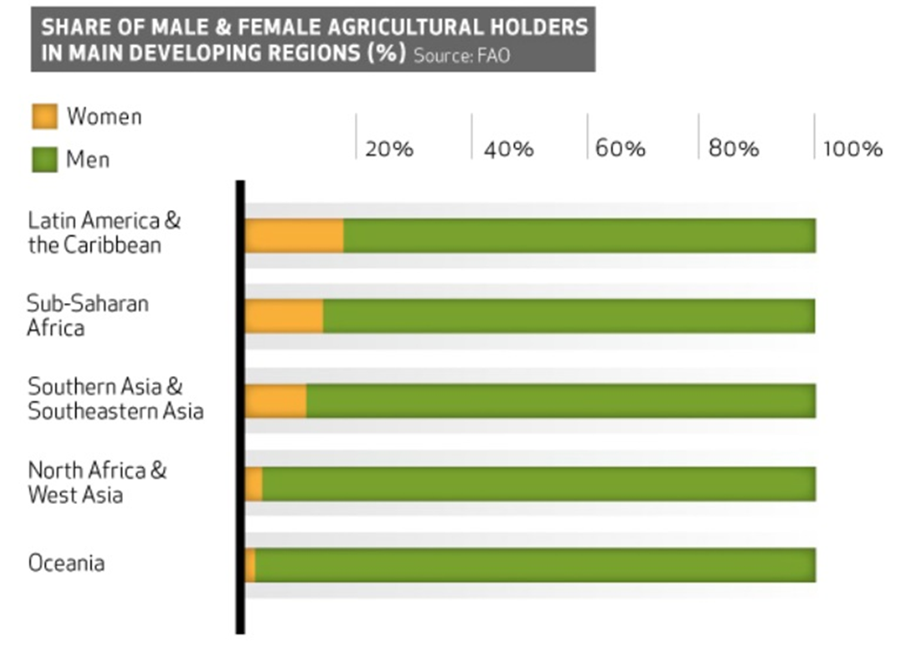
Across the Global South, women are increasing their participation in agriculture—a phenomenon referred to as the “feminisation of agriculture”.[32] This shift is driven largely by male out-migration to urban centres or non-farm employment, leaving women responsible for agricultural tasks that extend well beyond subsistence production. Most women engaged at the production stage are smallholder farmers, who constitute nearly 80 percent of the world’s farming population and produce around half of global food production.[33]
Women at the production level are central to labour-intensive activities such as seed selection, transplanting, weeding, and post-harvest processing. In South Asia and Sub-Saharan Africa, they make up almost half of all smallholder farmers and assume primary responsibility for food crops. In India, the share of women in agriculture rose from 57 percent in 2017–18 to 64.4 percent in 2023–24, with over 33 percent of agricultural workers and nearly 50 percent of self-employed farmers being women.[34]
Figure 3: Agricultural Holders, by Gender, in Major Developing Regions (%)
 Source: FAO, 2017 [35]
Time poverty compounds women’s workload in production. In 2023, women employed in agriculture worked an average of 36.7 hours per week, compared with 41.2 hours for men,[36] reflecting women’s dual responsibilities in farm labour and household work. This sustained time burden directly affects production outcomes, as it limits women’s ability to manage larger plots, adopt improved practices, or increase overall farm productivity, even as their labour remains critical to sustaining smallholder and household-based food systems.
Processing and Storing
Globally, women perform nearly 50 percent of post-harvest labour in low- and middle-income countries (LMICs), yet much of this work remains informal, unpaid, and absent from official statistics.[37] Across the Global South, women dominate labour-intensive activities such as drying, winnowing, cleaning, grading, small-scale milling, dairy processing, pickling, and other household-level processing.[38]
Beyond labour, women are also critical agents of value addition. They transform raw produce into consumable or market-ready products, manage storage to safeguard household food security during lean seasons, and ensure the quality of produce sold in markets. Despite this, women rarely control the sales or income from these activities. Men tend to dominate access to higher-value markets, leaving women to sell lower-quality or slightly spoiled produce at reduced prices or consume it within households. This reduces the economic returns from women’s labour and also reinforces gender inequities in value chains.
In Nigeria’s Delta State, for example, women handle 60–90 percent of cassava peeling, washing, slicing, soaking, and drying; however, they have little decision-making power over equipment or marketing channels.[39] This trend is persistent across LMICs where women’s labour in processing and storage remains essential and directly affects food quality, shelf life, and household food security, while also ensuring that produce moves efficiently from farm to market-ready form; however, economic returns and decision-making power are often dominated by men.
Distribution and Marketing
Even though women make up a substantial share of the agricultural workforce in developing economies, their participation becomes thinner up the agri-value chain. Gender norms often confine them to subsistence farming, while reliable global data on women’s engagement in agricultural trade remain limited, highlighting persistent gaps in recognition within official statistics.
In many regions of the Global South, women’s participation in agricultural distribution and marketing is largely mediated through collective platforms and cooperative structures. Across Latin America, women-led farmer organisations such as Pro Mujer in Central and South America and the Peruvian Producers Direct network provide smallholders with access to formal and semi-formal markets.[40] These organisations facilitate aggregation of produce, collective marketing, access to logistics and transport, and support for financial and technical services, enabling women to engage beyond household-level trade. Similarly, in Africa, farmer producer organisations (FPOs) like the Ethiopian Women Farmers’ Cooperative Union and Kenya’s Women in Agriculture Development FPOs aggregate outputs from women smallholders, connect them to regional marketplaces, and coordinate with buyers to ensure fair pricing and volume sales.[41] These FPOs serve as crucial intermediaries for women, creating visibility in markets where individual smallholders would otherwise struggle to participate.
Despite the growth of FPOs globally, women-led entities remain limited, and opportunities for leadership and control over decision-making are rare. In India, for example, while FPOs and Self-Help Groups (SHGs) provide access to local markets and collective bargaining, surveys indicate that only 13 percent of women engage with formal Agricultural Produce & Livestock Market Committee (APMC) mandi,[42] and just 3 percent of India’s 16,000 FPOs are exclusively women-led.[43] This reflects a broader trend in the Global South, where women’s participation in formal market channels remains constrained despite the presence of collective platforms.
At the same time, the expansion of digitalisation and e-commerce platforms has provided new avenues for women’s participation in agricultural markets. In India, the e-NAM (National Agriculture Market) platform,[a] launched in 2016, enables smallholders to engage with regulated mandis through digital payments and integrated supply chains. In Africa, platforms such as Jumia and mobile money systems like M-Pesa facilitate market access for rural women farmers. Despite these advances, women’s participation remains constrained by the gender digital divide, limited mobility, and low levels of financial literacy. These structural barriers inhibit their ability to fully leverage digital tools for market engagement, thereby restricting potential gains in income and empowerment.
Agri-business and Entrepreneurship
Agri-food markets across the Global South are expanding rapidly, creating opportunities for smallholders and micro-enterprises to integrate into value chains. For instance, Africa’s food market, valued at US$313 billion in 2013, is projected to triple by 2030,[44] highlighting the potential of agribusiness to drive employment and rural transformation. Women form the backbone of this sector, representing over 50 percent of the agricultural labour force, including roles in agribusiness.[45] Much of their participation occurs in micro and small enterprises focused on food production, processing, and trade. Collective platforms such as FPOs and cooperatives help link women-led enterprises to markets, providing access to credit, training, and stable buyers, as seen in cocoa, sorghum, and dairy cooperatives across East and West Africa. However, these ventures are often informal and constrained by limited growth opportunities.
In Southeast Asia and South Asia, women in rural areas are more likely to be self-employed and limited to subsistence farming in rural areas, often due to limited formal job opportunities. In a Lao PDR study, women owned 63 percent of Small and Medium Enterprises (SMEs), while men operate larger firms. In India, while approximately 22 percent of agricultural micro-enterprises are women-owned, women’s ownership declines sharply with enterprise size.[46]
Agri-tech startups have also emerged as potential avenues for expanding women’s participation in agriculture. India’s agri-tech sector is projected to reach US$24 billion by 2025, growing at an annual rate of 18 percent. However, women remain underrepresented in formal agribusiness, with only 6–10 percent of employees in top agri and agri-related companies being women.[47]
While platforms like SHGs, FPOs, and agri-tech startups provide entry points for women, they remain limited in scale and effectiveness, as women lack the technical skills and expertise needed to move beyond rural farming contexts. Thus, when women move from a rural setting to an urban one, the lack of these skills works as a disadvantage and they remain underrepresented in formal enterprises and high-return market activities.
Barriers to Women’s Full Participation in Agriculture
Women play a central role in agriculture across the Global South, yet their participation is limited by social, economic, and institutional barriers. They perform essential tasks across the value chain, from production to post-harvest activities, but their contributions are often undervalued and excluded from decision-making, policy design, and economic recognition. These constraints reduce productivity, restrict access to higher-value markets, and limit agricultural growth.
Social and Cultural Norms
Women are often perceived as “helpers” rather than farmers, with their labour concentrated in low-value, labour-intensive tasks such as sowing, weeding, transplanting, post-harvest processing, and livestock care. These activities are essential for household food security but generate limited cash income and confer little decision-making power. These patterns are reinforced by gender norms that intersect with women’s biological and reproductive roles, particularly in contexts where agricultural work is physically demanding. The physical burden of tasks requiring prolonged manual labour, combined with pregnancy, childcare, and inadequate access to healthcare or workplace facilities, constrains women’s ability to transition into mechanised, higher-return, or market-facing roles.
In South Asia, women’s participation in agriculture is shaped by both gender and social hierarchies. In India, women of all castes are involved in farming, but caste identity often regulates the extent of engagement. Women from general castes tend to participate less than those from lower castes. Across caste groups, women are rarely recognised as “farmers” (kisan), which restricts their access to inputs, extension services, and markets.[48]
Land ownership is a key determinant of agricultural empowerment, and it remains heavily gendered. Though women contribute a major portion of the agricultural workforce, only 15 percent are landowners.[49] This is especially pronounced in the Middle East and North Africa (MENA) region, where women own just 5 percent of land—the lowest in the world.[50] Much of this ownership is joint, which often does not translate into real control or decision-making authority. In Sub-Saharan Africa, only 15 percent of landholders are women, and as land is the main form of collateral for credit and access to extension services, women without formal ownership receive less than 10 percent of institutional loans and only 7 percent of extension services.[51] This gendered land gap limits women’s economic agency and also excludes women from formal financial as well as state support mechanisms.
Time poverty adds another layer to structural barriers in agriculture. In rural India, women spend significant time on domestic work and caregiving, including about 7 hours of strenuous labour daily, while devoting 34 percent of their time to unpaid caregiving, nearly double that of men.[52] In Pakistan, rural women spend roughly five hours per day on unpaid work compared with 0.5 hours for men. This physical and temporal burden, shaped by both social norms and biological roles, limits their ability to engage in higher-value agricultural tasks, participate in markets, or pursue entrepreneurial opportunities, restricting both economic and social agency.
Environment and Climate Constraints
Extreme weather events such as floods, droughts, and heatwaves increase women’s care and labour responsibilities, as they are often responsible for managing household food security under more unpredictable conditions, reinforcing existing structural inequalities. Female-headed farming households experience higher income losses from climate stressors: heat reduces annual income by 8 percent, equivalent to roughly US$37 billion globally, while flooding decreases income by 3 percent, or US$16 billion per year. If global temperatures rise by an additional 1°C, women could lose 34 percent more of their income than male-headed households.[53]
Climate pressures also increase women’s unpaid labour and health risks. Scarcity of water and fuel forces longer collection trips. Heat stress disrupts hormonal cycles, worsens pre-menstrual symptoms, and increases risks of adverse pregnancy outcomes, particularly among those working in extreme temperatures without adequate protection or healthcare.[54] Collectively, these environmental and climatic constraints act as stressors to already existing barriers, further constraining women’s full participation in agricultural value chains, limiting both productivity and the potential for sustainable livelihoods.
Economic Constraints
Limited access to credit compounds the challenge for women. A study from 2014 has found that 86 percent of women-led enterprises report unmet credit demand, compared to 72 percent for men.[55] SHGs and microfinance programmes provide small loans of between US$563.23 and US$1,126.45, which are insufficient for machinery, infrastructure, or scaling operations, keeping women-owned businesses small and limiting their economic growth opportunities.
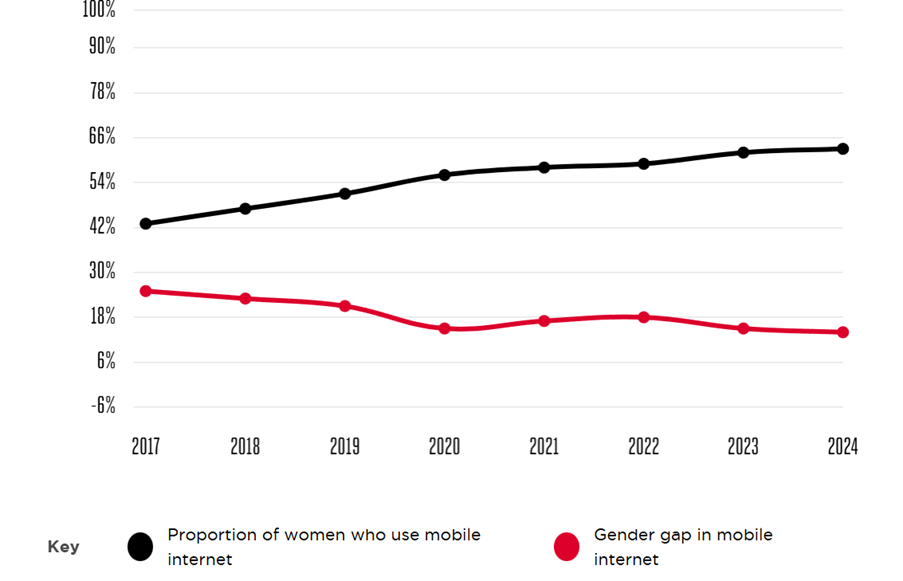
Women also often lack market-oriented, digital, and mechanisation skills, restricting their ability to adopt higher-return practices or transition into urban employment and formal agri-enterprises. These constraints are closely linked to access to technology. Limited financial resources prevent them from purchasing smartphones, paying for mobile data, or investing in mechanised tools that could improve farm productivity and efficiency. Globally, women in LMICs are less likely than men to own mobile phones or use mobile internet, with South Asia and Sub-Saharan Africa accounting for a large share of women still unconnected.[56]
Figure 4: Mobile Gender Gap (2017-2023)
Source: GSMA[57]
Low digital skills and limited access to fintech technologies impede access to capital. In Africa, only 10 percent of venture capital is allocated to female-led startups, despite a 15-percent annual increase in women-owned fintech businesses.[58] In the case of agriculture, limited access to devices, connectivity, and digital skills reduces women’s ability to obtain extension services, market information, weather forecasts, and financial tools. In Ethiopia, for example, only 14 percent of women had adequate access to agricultural information, compared to 97.5 percent of men, contributing directly to productivity differences between women- and men-managed farms.[59] Lack of access to mechanisation keeps women tied to labour-intensive, low-value tasks, preventing them from moving up the value chain.
Cultural norms, safety concerns, and mobility restrictions often confine women to selling produce in local markets, where intermediaries capture a large share of profits. In Sub-Saharan Africa, women frequently rely on male relatives for transport, reducing both income and bargaining power.[60]
Institutional markets, like India’s Agricultural Produce Market Committees (APMCs) provide transparent pricing and broader networks, but only 13 percent of women report selling through them.[61] Independent mobility is a factor too. In India, only 54 percent of women ages 15–49 can visit a market alone, which impedes financial autonomy.[62] Data further shows that 49 percent of women lack decision-making power over spending, and 44 percent of those with bank accounts cannot access their money, restricting investment in inputs, transport, or scaling production.[63]
Climate-induced shocks reduce crop yields and income stability, disproportionately affecting women farmers who already have limited access to credit, insurance, and climate-resilient technologies. These shocks can push women further into low-value, subsistence farming while men control higher-value segments that are better insulated against climate risks.
Policy Gaps
Agricultural laws and policies remain largely male-centric, treating men as the default landowners, borrowers, and decision-makers. This framing sidelines women from key resources that shape agricultural participation and reinforces existing structural barriers. Land is the clearest example; for instance, in Sub-Saharan Africa, only 13 percent of landholders are women, as customary systems continue to override statutory guarantees.[64] Even where reforms exist, outcomes are uneven.
Credit and technology policies show similar gaps. In India, the Kisan Credit Card scheme has disproportionately low female enrolment because eligibility is tied to land titles, excluding women cultivators without ownership.[65] Mechanisation and technology-transfer programmes are rarely designed with women’s needs in mind, leaving them without support to adopt improved tools or digital innovations that could raise productivity.
Data gaps in agriculture systematically understate women’s contributions, weakening the case for gender-responsive policies. Women’s labour in sowing, weeding, post-harvest processing, and livestock care is often counted as “household help” rather than economic activity, creating statistical invisibility.
The FAO estimates that women account for nearly 50 percent of the agricultural workforce globally, yet national surveys in many countries underreport female participation by 10–20 percent because unpaid or subsistence work is excluded. In India, 77 percent of rural women are engaged in agriculture, but most are classified as “unpaid helpers”, which is also the case in other MENA countries, where they are labelled as “housewives” rather than farmers.[66] This undercounting distorts policy design, as it impedes access to credit, subsidies, and extension services. Without sex-disaggregated, activity-specific agricultural data, structural barriers remain invisible to policymakers and under-addressed in national strategies.
The Cost of the Barriers
When women’s contributions to agriculture are not recognised and integrated equitably, societies lose out on significant development and climate benefits. Development dividends, including higher crop yields, improved household nutrition, and more inclusive economic growth, remain unrealised, while climate dividends, such as enhanced ecosystem resilience, adaptive farming practices, and knowledge-driven climate adaptation rooted in women’s traditional expertise, are weakened. Empirical evidence from South Asia and Sub-Saharan Africa demonstrates that these gaps perpetuate lower productivity, reinforce gendered inequalities in decision-making and resource access, and reduce the overall adaptive capacity of agricultural systems. These patterns underscore the urgent need for gender-responsive policies that formally recognise women’s roles, strengthen their access to resources and technology, and leverage their knowledge to build more resilient, equitable, and productive agri-food systems.
Economic Consequences: Reduced Productivity and Efficiency in Value Chains
A landmark FAO analysis estimates that equalising access to productive resources for women could boost yields on their farms by 20–30 percent, elevating total agricultural output in developing countries by 2.5–4 percent and potentially reducing hunger for 12–17 percent of the population.[67] This inefficiency stems from intra-household disparities, where women’s plots receive less labour, fertiliser, and extension support as compared to those of men. Evidence from Burkina Faso shows that reallocating inputs to women’s fields could substantially increase household output.[68]
Beyond crops, women also dominate allied sectors such as dairy and poultry, where they manage livestock, milk production, and egg supply. In India, women constitute 70 percent of dairy farmers, and studies suggest that households where women make dairy production decisions achieve higher productivity.[69] Despite this, their labour and leadership in these sectors remain undervalued, contributing to broader inefficiencies in household income, food security, and local economies. In South Asia, these gaps translate to tangible losses, constraining women’s productivity and leading to broader inefficiencies, such as reduced crop yields, lower household incomes, and foregone GDP contributions. The FAO’s 2023 ‘The Unjust Climate’ report demonstrates that gender inequality in agriculture impacts productivity and incomes in South Asia and the need for addressing gender barriers in non-farm work.[70],[71]
Social Consequences: Reinforcement of Gender Inequality and Poverty
The undervaluation of women’s work entrenches social fissures, amplifying gender inequality and trapping households in poverty through entrenched time poverty and normative barriers. Globally, women spend 2.5 times more hours on unpaid care work than men, a disparity that curtails their participation in paid labour and decision-making.[72] In India, this manifests starkly: women dedicate 5 hours daily to unpaid domestic tasks versus 1.5 hours for men, with 81.5 percent of rural women engaged in household services compared to 27.1 percent of men.[73] A study from Central India finds that although women contribute heavily to farming and household chores, their leisure time is far lower than men’s. Despite significant labour, women have limited decision-making power.[74]
The COVID-19 pandemic intensified these inequities, with Indian women’s care workload surging 30 percent due to school closures, further entrenching inequality as societal norms in rural areas discourage men from sharing chores.[75] Overrepresentation in low-wage, informal sectors—because of unpaid home duties—exacerbates poverty, as women control fewer financial resources and face barriers to outsourcing tasks, limiting upward mobility. Girls bear a disproportionate load, spending 40 percent more time (160 million extra hours daily worldwide) on chores, which impairs education and future earnings, reinforcing intergenerational poverty.[76]
Environmental Consequences: Missed Opportunities for Sustainable Practices Linked to Women’s Knowledge
The environmental repercussions of sidelining women’s work extend to climate vulnerability, where gender-blind approaches forfeit women’s indigenous knowledge, hindering sustainable agriculture and amplifying ecological degradation.[77] Women, who manage 70 percent of smallholder farms in Africa and steward over half of the continent’s nutrition through regenerative practices, hold vital insights into soil fertility, seed conservation, and biodiversity, yet patriarchal barriers limit their adoption of climate-smart techniques.[78] In LMICs, women face heightened climate risks from droughts, floods, and erratic rains due to restricted resource access, leading to crop failures, biodiversity loss, and reduced pasture productivity.[79]
Gender-transformative interventions like cash transfers, savings groups, and life skills programmes boost women’s empowerment and equality, supporting more peaceful and inclusive societies.[80] Initiatives like India’s Navdanya seed banks,[b] launched in 1991 and led by women conserving native crops across 22 states, demonstrate how empowering female stewards could boost carbon sequestration and prevent forest loss, yet underfunding such knowledge perpetuates reliance on chemical-intensive methods.[81] Gender-responsive policies, absent in many climate frameworks, thus forfeit dividends like 20–30 percent yield gains from equitable resource access, underscoring women’s untapped role in averting environmental tipping points.[82]
| Box 1: Regional Overview: The Scale of Losses in South Asia South Asia exhibits the world’s highest gender gap in agricultural land ownership, with women owning just 2-13.5 percent of holdings, while male-operated plots are often double the size of those managed by women.[83] This disparity, rooted in discriminatory inheritance laws and norms, leads to underinvestment in women’s farms, perpetuating a cycle of low productivity. The resulting combination of limited access to resources and structural inequality contributes to what is called the “South Asian Enigma”, where persistent hunger and malnutrition coexist with economic growth. Closing these gender gaps could boost regional agricultural output by 20-30 percent potentially adding to GDP through gender-transformative policies.[84] In India, gender disparities in access to land, credit, inputs, and technology result in productivity shortfalls, with women-managed farms producing 7–11 percent lower output value than men’s when accounting for crop and input differences, and up to 20–30 percent lower yields in broader developing-country comparisons where resource gaps remain unaddressed.[85] A 2024 study reviewed 25 quantitative and mixed-method studies on gender inequality in Indian food systems, and found that 88 percent of analyses confirm women’s over-representation in low-input subsistence farming leads to 15–25 percent inefficiencies in staple crops like rice and wheat.[86] For instance, in Uttar Pradesh and Bihar—rice and wheat belts—women’s lack of extension services (reaching only 10–15 percent of female farmers vs. 40 percent of males) caps technical efficiency at 75–85 percent, causing 10–20 percent post-harvest losses and reducing farm incomes by 25 percent.[87] A 2018 McKinsey report projected an addition of US$4.5 trillion to GDP in Asia Pacific by achieving gender parity; Indian agriculture could add US$770 billion to GDP by 2025.[88] Thus underscoring the current gaps, with women’s MSMEs facing a US$1.4-1.7 trillion global credit gap, estimated at US$158 billion for India.[89] Bangladesh, where women comprise 58 percent of the agricultural workforce, faces amplified losses due to climate vulnerabilities and digital divides. Gender gaps in access to digital technology and information (19 percent in women as compared to 36 percent in men) lead to inequitable access to agricultural innovations, thus increasing input costs and reducing net farm incomes.[90] A hotspot mapping identifies Dhaka and Mymensingh divisions as “climate-agriculture-gender inequality hotspots,” vital for policies that enhance women’s climate resilience while tackling structural gender barriers to reduce their elevated climate risks.[91] Closing the gender digital divide could boost GDP by US$1.5 trillion and save 30 million women from poverty in Southern Asia.[92] |
| Box 2: Examples of Value Chains Where Women’s Unrecognised Work Leads to Inefficiencies Real-world cases from India illuminate how unrecognised women’s labour breeds inefficiencies, from fragmented supply chains to stalled innovation. In rural Uttar Pradesh, male outmigration increases women’s agricultural and household workload. While it can raise household income and social status, women often remain without full financial autonomy or decision-making power, limiting their overall empowerment.[93] A 2025 study on Kerala’s cardamom plantations finds that women dominate labour-intensive tasks but remain in informal, low-wage roles without technology access, causing inefficiencies, quality issues, and yield losses that reduce value chain profitability.[94] Meanwhile, success stories from Andhra Pradesh finds adopting improved millet production technologies increases yields and reduces cultivation costs, effectively doubling farmers’ incomes with women farmers gaining greater financial independence.[95] In Odisha’s fish value chain, women’s SHGs trained in hygienic fish processing, packaging, and marketing created value-added products with longer shelf lives, improved local sales, and strengthened skills, confidence, and leadership among rural women.[96] The “Empowering women through hygienic dried fish production and marketing in Odisha” initiative (with WorldFish and government partners) also emphasises using solar dryers, training women SHGs, and improving storage/handling to reduce losses and improve quality.[97] |
Table 1: Potential Impact of Gender-Responsive Policies in Agriculture
| Chain Stage | Inequities | Policy Recommendations | Expected Impacts |
| Production | Land and input access gaps | Secure tenure reforms, input subsidies | 20-30% yield increase[98] |
| Processing | Health risks, low wages | Safety standards, skill training | 10-30% or more income increase, and loss reductions of similar orders of magnitude[99] |
| Distribution | Infrastructure barriers | Gender-inclusive transport investments | Increased market reach by 31%[100] |
| Marketing | Network exclusion | Digital literacy programs, quotas | Income boost 16-27%, equity in sales[101] |
Source: Authors’ own, using various open sources
Policy Recommendations
- Strengthen Access to Land, Credit, and Inputs
Equitable land access is critical to unlocking women’s full potential in agriculture, as the lack of ownership limits their ability to invest, access credit, adopt climate-smart practices, and participate in higher-value segments. Evidence shows that secure land rights generate measurable gains. For instance, in Tanzania, women granted stronger, formally recognised land rights earned up to 3.8 times more income and were more likely to maintain individual savings, enabling greater investment in land, access to finance, and fuller participation in economic activity.[102] In Peru, women’s land ownership increased crop diversity and household nutrition.[103]
These global findings are mirrored in India, where state-level pilots show that how land rights are designed matters as much as whether they exist. In West Bengal, mandatory joint and female-first titling under the Nijo Griha Nijo Bhumi (Own Home Own Land) programme has been a stepping stone to strengthen women’s asset security, improve access to credit, and enable greater participation in farming decisions,[104] while similar joint patta initiatives in Tamil Nadu have enhanced women’s recognition as farmers within state schemes. Granting women greater decision-making authority enhances resilience to external shocks, particularly climate change. In Ethiopia, even joint land titles have empowered women to invest more in soil and water conservation, reducing the adverse effects of rainfall variability on farm revenues.[105]
However, land rights alone are insufficient if they are not complemented by gender-responsive financial systems. Secure titles must translate into access to affordable credit, insurance, and working capital. This requires strengthening land–finance linkages through measures such as expanding priority sector lending for women farmers and simplifying digital KYC processes for women’s collectives. In India, for instance, this can be enabled by leveraging the Jan Dhan–Aadhaar–Mobile (JAM) framework to better align land records, bank accounts, and digital identities. When these systems are integrated, women are better positioned to access institutional finance, reduce dependence on informal lenders, and invest in productivity-enhancing and climate-smart technologies. Such a financing backbone is essential to ensure that gains from land reforms are sustained and can scale across agricultural value chains. Therefore, revising policies to enable the strengthening of women’s land rights and access to credit delivers multiple dividends, such as higher agricultural productivity, boosting economic growth, enhanced food security and climate resilience, and at the same time delivering stronger outcomes for women’s empowerment and well-being. - Enhance Digital and Technological Inclusion
Enhancing productivity and strengthening food security hinges on digital and technological innovation in agriculture. As women’s participation in the sector grows, closing the triple digital divide has become imperative. This would include a focus on improving digital infrastructure, providing localised training and digital literacy programmes, ensuring affordable technology access, and fostering collaboration among governments, NGOs, and private players. Across the Global South, government-led initiatives have demonstrated how technology can empower women farmers. For instance, India’s NAMO Drone Didi scheme, launched in 2023, trains women SHG members to operate drones for precision agricultural services, including fertiliser application, crop monitoring, and pest control.[106] This focus on women’s technological agency is further reflected in India’s Pradhan Mantri Dhan Dhaanya Krishi Yojana (PM-DDKY) scheme, introduced in 2025, which explicitly targets rural women by supporting 10,000 women producer groups through training, access to credit, and improved market linkages.[107]
Complementing government efforts, industry support from leading agri-tech companies has successfully piloted mobile advisories, climate-resilient seeds, and precision farming solutions for women smallholders. In India, industry partnerships such as Corteva Agriscience’s 2MillionWomen initiative operate as multi-layered interventions, working through women-led collectives and farmer producer organisations to strengthen livelihoods through agri-education, skilling, and entrepreneurship, while also addressing health and nutrition outcomes.[108] Similar initiatives have delivered training on post-harvest management, market linkages through platforms like India’s e-NAM, and financial literacy through local NGOs and FPOs that have strengthened women’s capacity across the value chain.[109] These PPPs have had positive outcomes, with success stories showing that climate-smart agriculture interventions implemented using tools such as AI/ML ensure that agri-value chains remain resilient and efficient.[110]
Such partnerships offer scalable pathways for other economies across the Global South. Furthermore, emerging digital tools, including artificial intelligence and user-friendly tools such as voice-based interfaces, can help adapt technology to local contexts and overcome literacy barriers. At the same time, given women’s concentration in labour-intensive agricultural tasks, there is a critical need for women-centric tools and machinery designed to reduce physical strain, increase efficiency, and meet ergonomic requirements. Gender-responsive technology and innovation policies are therefore essential to empower women farmers and ensure their equitable participation in digital agriculture ecosystems. - Leveraging Traditional Knowledge
Women farmers are known custodians of traditional ecological knowledge that underpins resilient and biodiverse food systems. Such deep ecological knowledge is a powerful complement to scientific and technological innovation. Rather than being sidelined, indigenous practices should be woven into climate‑resilient agriculture policies and adaptation pilots so that women’s knowledge systems inform research, breeding, climate forecasting, and ecosystem management. In Peru, indigenous women farmers have revived and managed native seed banks to preserve centuries‑old varieties of potatoes, maize, quinoa, and legumes that are adapted to local micro‑climates and help buffer food systems against climate variability.[111] Similarly, the Chizami village in Nagaland, India, demonstrates how women-led community seed banks conserve a wide range of traditional rice, millet, tuber, and vegetable varieties, reinforcing agrobiodiversity and local food systems amid environmental change.[112]
To fully realise the potential of these knowledge systems, they must be paired with innovation, technical, and financial support. Therefore, strategic partnerships with governments, NGOs, and private sector actors are essential to scale such interventions effectively. In India, public–private partnerships illustrate this pathway by enabling women’s collectives to integrate traditional ecological knowledge with regenerative practices, renewable energy, and market access.[113] - Build Climate-Resilient and Inclusive Value Chains
An inclusive agricultural chain is also a more resilient one. Recognising women’s labour and enabling their equitable participation in higher-value activities—such as processing, marketing, and agribusiness—is critical to improving efficiency and competitiveness. However, with climate impacts intensifying, it is important that agri-value chains are inherently climate-resilient with a gender focus. Supporting women-led cooperatives and enterprises through technical training, market linkages, and climate-smart innovations strengthens collective action, increases household resilience, and facilitates entry into profitable segments. In India, the National Cooperation Policy (NCP) 2025 has been instrumental in this regard, linking nearly 10 crore women to cooperatives through SHGs and providing targeted finance, training, and market support across agriculture, dairy, and handicrafts.[114] While these initiatives have successfully boosted productivity through inclusive participation, integrating climate-resilient practices is now essential to ensure that growth remains sustainable, adaptive, and environmentally robust.
This depends on strategic partnerships and targeted finance. For example, UNDP’s Climate Finance Network collaborated with a blended finance company to design a guarantee facility that unlocks credit for women-led climate-smart enterprises, enabling investments in resilient inputs, adaptive production systems, and post-harvest infrastructure capable of withstanding climate and market shocks.[115] Formalising women’s contributions across value chains therefore boosts productivity, amplifies economic empowerment, and ensures that climate adaptation and sustainability efforts are both socially equitable and environmentally effective. - Reduce Time Poverty and Unpaid Care Burden
Investing in community-level infrastructure is critical to alleviate the domestic and caregiving burdens that limit women farmers’ productivity. Access to reliable water systems, schools, childcare facilities, and energy directly reduces time spent on labour-intensive domestic work, freeing women to participate in higher-value agricultural tasks, adopt climate-smart practices, and engage in markets. Interventions promoting gender-equitable social norms, including awareness campaigns and incentives for male engagement in household care, have been shown to increase women’s labour allocation to productive activities, improving adoption rates of new agricultural technologies and income-generating opportunities.
Integrating these measures with social protection mechanisms, such as cash transfers, paid parental leave, and conditional support tied to labour-saving infrastructure, strengthens women’s financial autonomy, mitigates vulnerability to climate shocks, and enhances household welfare. Such coordinated approaches not only improve productivity and incomes but also generate broader development and climate dividends, including increased food security, resilience to extreme weather events, and more inclusive rural economies. - Gender-Responsive Policy Reform
Strengthening the visibility and agency of women farmers requires systematic collection of sex-disaggregated, activity-specific agricultural data across land records, farm registries, and national surveys. Women’s agricultural contributions are routinely misclassified as household work, undermining policy relevance and resource allocation. Therefore, mandating sex-segregated data in agricultural surveys becomes foundational in recognising and valuing women’s work in agriculture.
Data recognition must be reinforced through institutional recognition at the grassroots. When women are formally recognised as farmers within local registries, producer organisations, and social protection systems, which would increase their access to credit, inputs, extension services, and climate-resilient technologies.
Finally, gender-responsive reform requires aligning planning, financing, and governance with women’s actual roles in agriculture. Therefore, gender budgeting becomes a highly relevant tool in ensuring that agricultural policies are truly gender responsive. For instance, although India has published a Gender Budget Statement (GBS) since 2005–06, agricultural allocations within the GBS remain modest and fragmented when compared to sectors such as nutrition, health, and social protection.[116]
Embedding gender budgeting within agricultural policy would enable systematic tagging and tracking of expenditures that directly benefit women across value chains, including support for women-led FPOs, post-harvest infrastructure, digital and mechanisation support, and climate-resilient inputs and insurance. - Leverage Multilateral and G20 Platforms
Multilateral and G20 platforms should prioritise gender-equitable resource allocation and climate resilience across the SDGs, NDCs, and development agendas. Gender should be mainstreamed in climate adaptation programmes so that capital can be leveraged into strengthening food systems. Interventions targeting women-led cooperatives, climate-smart agriculture, digital inclusion, and financial access can increase productivity, strengthen household resilience, and improve ecological sustainability. India illustrates this potential. Through CGIAR–ICAR collaborations such as group farms in the Eastern Gangetic Plains, integrating SDG2 (Zero Hunger) and SDG5 (Gender Equality) has raised women’s incomes and improved soil health through sustainable practices.
India’s BRICS presidency presents a unique opportunity to champion women’s empowerment in agriculture on both national and global platforms. India can use its leadership role to mainstream gender equity in agri-food systems, drawing on successful domestic models and fostering cooperation. The G20 has amplified this vision, recognising women as economic multipliers across all goals, from poverty reduction (SDG1) to ecosystem restoration (SDG15), and calling for scaled investment in grassroots models that globalise inclusive growth. Further, South–South cooperation allows other Global South countries to learn from these models, adapting women-centred approaches to their own agricultural and climate contexts. Best practices can be shared through regional forums, joint research initiatives, and technical assistance programmes, enabling replication of effective strategies that integrate women’s labour, decision-making authority, and traditional ecological knowledge. Scaling these interventions globally strengthens the link between gender equality, climate adaptation, and sustainable development, creating measurable economic, environmental, and social gains.
Conclusion
Gender inclusion is no longer a peripheral concern in agri-food systems and has become essential to building resilience. As climate change intensifies, agricultural communities face more frequent and severe shocks—from floods and droughts to shifting growing conditions and market disruptions—that threaten food security, livelihoods, and ecosystem stability. Addressing them requires harnessing the full potential of all actors in the system, including women, whose knowledge, labour, and decision-making capacities are critical to adaptive and sustainable practices. Without their active participation, value chains risk remaining fragile, inefficiencies persist, and communities are left poorly equipped to respond to climate disruptions, reinforcing cycles of vulnerability.
Integrating gender perspectives strengthens the foundations of agri-food systems. Women’s knowledge of ecological management, local crop varieties, soil health, and water conservation informs adaptive strategies that are context-specific, efficient, and sustainable. Inclusion ensures that technological innovations, climate-smart practices, and market opportunities reach those best placed to implement them, generating spillover benefits across communities. Beyond efficiency gains, it embeds social equity within agricultural transformation, ensuring that the burdens and benefits of adaptation and growth are shared more fairly.
With 2026 designated as the Year of the Woman Farmer, there is an opportunity to move beyond symbolism and embed gender equity at the heart of agricultural policy and practice. This moment should position women farmers not only as visible participants but as central actors in food security, climate resilience, and rural prosperity. By leveraging the combined strengths of industry, government, and civil society, 2026 offers an opportunity to transform intent into tangible impact and accelerate inclusive, sustainable agricultural development.
Ultimately, resilience, sustainability, and equity are inseparable in agri-food systems. The threats posed by climate change are systemic, and so must be the responses. Embedding gender in the design and execution of agricultural policies, value chains, and climate adaptation strategies becomes a strategic imperative.
Shoba Suri is Senior Fellow, Health Initiative, ORF.
Sharon Sarah Thawaney is Executive Assistant to the Vice President (Development Studies) and ORF Kolkata.
All views expressed in this publication are solely those of the authors, and do not represent the Observer Research Foundation, either in its entirety or its officials and personnel.
Endnotes
[a] A pan-India electronic trading portal that integrates existing APMC mandis into a unified national market.
[b] It serves to protect native seeds and promote sustainable agriculture.
[1]“Agriculture Trade 2025: Challenges & Opportunities,” Farmonaut, January 14, 2026, https://farmonaut.com/blogs/agriculture-trade-2025-challenges-opportunities.
[2]OECD/FAO, OECD-FAO Agricultural Outlook 2025-2034 (Paris: OECD Publishing, 2025), https://www.oecd.org/en/publications/2025/07/oecd-fao-agricultural-outlook-2025-2034_3eb15914.html.
[3] “Agritech Market Size & Share Analysis – Growth Trends & Forecasts (2025 – 2030),” Mordor Intelligence, 2025, https://www.mordorintelligence.com/industry-reports/global-agritech-market.
[4] Sudhakar Patra, “Impact of Climate Change on Food Security in India: An Evidence from Autoregressive Distributed Lag Model,” Environmental Science and Pollution Research 30 (2025), https://www.sciencedirect.com/science/article/pii/S266604902500009X.
[5]FAO, The Status of Women in Agrifood Systems, Rome, FAO, 2023, https://openknowledge.fao.org/server/api/core/bitstreams/e7689bf7-00f0-465b-ad03-e0c56ffb14b1/content.
[6] “The Status of Women in Agrifood Systems, 2023”.
[7] USDA National Agricultural Statistics Service, 2022 Census of Agriculture: Female Producers (Washington DC: USDA,2024), https://www.nass.usda.gov/Publications/Highlights/2024/Census22_HL_FemaleProducers.pdf.
[8] Margreet Zwarteveen, “Farm Wives or Female Farmers?,” International Water Management Institute (IWMI), https://archive.iwmi.org/wle/thrive/big-questions/what-truth/farm-wives-or-female-farmers/.
[9] “The Status of Women in Agrifood Systems, 2023”.
[10]World Economic Forum, Global Gender Gap Report 2025, Geneva, World Economic Forum, 2025, https://reports.weforum.org/docs/WEF_GGGR_2025.pdf.
[11] Armand Fréjuis Akpa et al., “Women’s Engagement in Agriculture and Income Inequality in Sub-Saharan Africa,” Social Sciences & Humanities Open 9, 2024, 100888, https://www.sciencedirect.com/science/article/pii/S2590291124000858
[12] Caroline Criado Perez, Invisible Women: Exposing Data Bias in a World Designed for Men (London: Penguin, 2019).
[13] “Colonial Legacies, Inherited Structures Constrain Women’s Mobility, Economic Power and Access to Rights,” The ROADS Initiative, https://theroadsinitiative.org/blog-colonial-legacies-inherited-structures-constrain-womens-mobility-economic-power-and-access-to-rights/.
[14] Jessica Shao and Yoolim Lee, “Gender Norms and Women’s Double Burden in East Asia,” The Diplomat, November 2023, https://thediplomat.com/2023/11/gender-norms-and-womens-double-burden-in-east-asia/.
[15] “What Was the Women’s Land Army?,” Imperial War Museums, https://www.iwm.org.uk/history/what-was-the-womens-land-army.
[16] International Finance Corporation, Women in Agribusiness Value Chains, Washington DC, IFC, 2016, https://www.ifc.org/en/what-we-do/sector-expertise/agribusiness-forestry/promoting-inclusive-development/women-in-agribusiness-value-chains.
[17] “Women Farmers, Food Production, Land Rights,” World Economic Forum, March 2018, https://www.weforum.org/stories/2018/03/women-farmers-food-production-land-rights/.
[18] Mónica Juliana Chavarro, Manuel Moreno ,”Integrating Gender and Intersectionality in Post-Harvest Loss Research,” CGIAR GENDER Impact Platform, February 24, 2025, https://gender.cgiar.org/news/integrating-gender-and-intersectionality-post-harvest-loss-research-helps-reduce-negative.
[19] IUCN National Committee of the Netherlands, Women in a Degraded Amazon: Struggles for Land, Body and Nature, Amsterdam, IUCN NL, 2025, https://www.iucn.nl/app/uploads/2025/03/Women-in-a-degraded-Amazon-struggles-for-land-body-and-nature_IUCN-NL-March-2025.pdf.
[20] “The Status of Women in Agrifood Systems, 2023”.
[21] “The Status of Women in Agrifood Systems, 2023”.
[22] Chiara Perelli et al., “Ecological Economics and Gender,” Ecological Economics 219 (2024): 108145 May, https://www.sciencedirect.com/science/article/pii/S0921800924000429.
[23] “Facts and Figures: Economic Empowerment,” UN Women, https://www.unwomen.org/en/articles/facts-and-figures/facts-and-figures-economic-empowerment#_ednref3.
[24] “The Status of Women in Agrifood Systems, 2023”.
[25] “Women Hold Seeds for a Stronger Food System in Peru,” International Potato Center (CIP), https://cipotato.org/blog/women-hold-seeds-stronger-food-system-peru/.
[26] “Advancing Gender Equity and Social Inclusion in Agricultural Value Chains,” Zero Deforestation Hub, https://zerodeforestationhub.eu/news/advancing-gender-equity-and-social-inclusion-in-agricultural-value-chains-highlights-from-the-gesi-tot-workshop-in-altamira-brazil/.
[27] Agnes Quisumbing, Jordan Kyle, Katrina Kosec, and Catherine Ragasa, “Pathways to Power in Fragile Settings: Rethinking Women’s Roles in Agriculture,” International Food Policy Research Institute (IFPRI), April 25, 2025, https://www.ifpri.org/blog/pathways-to-power-in-fragile-settings-rethinking-womens-roles-in-agriculture-and-food-systems/.
[28] Priyanka Varma, “Why Investing in Women Benefits Us All,” Harvard Kennedy School, Center for International Development, May 6, 2024, https://www.hks.harvard.edu/centers/cid/voices/why-investing-women-benefits-us-all.
[29] Mohammad Hasan Mobarok, Theodoros Skevas, and Wyatt Thompson, “Women’s Empowerment in Agriculture and Productivity Change: The Case of Bangladesh Rice Farms,” PLoS One 16, no. 8 (2021): e0255589, https://doi.org/10.1371/journal.pone.0255589.
[30] “Goal 5: Achieve Gender Equality and Empower All Women and Girls,” United Nations Sustainable Development Goals, https://www.un.org/sustainabledevelopment/gender-equality/.
[31] World Bank, An Investment Framework for Nutrition, Washington DC, World Bank, 2017, https://www.worldbank.org/en/topic/nutrition/publication/investment-framework-nutrition.
[32] Nibedita Mishra et al., “Gender Inequality in Agricultural Productivity,” Asian Journal of Agricultural Extension, Economics & Sociology 42 (2024), https://doi.org/10.9734/ajaees/2024/v42i122626.
[33] “Family Farming Knowledge Platform,” FAO, https://www.fao.org/family-farming/detail/en/c/1634537/#:~:text=Research%20by%20the%20Food%20and,productivity%2Denhancing%20inputs%20and%20services.
[34] Ministry of Finance, Government of India, Economic Survey 2024-25 (New Delhi: Government of India, 2025), http://indiabudget.gov.in/economicsurvey/doc/eschapter/echap12.pdf.
[35] “Climate-Smart Agriculture,” FAO https://www.fao.org/climate-smart-agriculture/news/detail/en/c/881891/.
[36] FAO, Employment Indicators 2000-2023, July 2025, https://www.fao.org/statistics/highlights-archive/highlights-detail/employment-indicators-2000-2023-(july-2025-update)/en
[37] Chavarro, “Integrating Gender and Intersectionality in Post-Harvest Loss Research”.
[38] Bojjagani Jhansi et al., “Journal of Scientific Research and Reports Article,” Journal of Scientific Research and Reports 31, no. 4 (2025): 502–512, https://www.journaljsrr.com/index.php/JSRR/article/view/2974.
[39] Olanike Kafayat Olaomo et al., “Challenges of the Nigerian Cassava Value Chain,” Corpus Publishers, Environmental Sciences and Ecology: Current Research 3, no. 8 (2022): 1078, https://www.corpuspublishers.com/assets/articles/esecr-v3-22-1078.pdf#:~:text=The%20Nigerian%20cassava%20value%20chain%20shows%20different,of%20their%20position%20in%20the%20labor%20market.
[40] “Pro Mujer and Agrojusto Join Forces to Promote Economic Inclusion of Rural Women Entrepreneurs,” Pro Mujer, October 1, 2025, https://promujer.org/2025/10/01/pro-mujer-and-agrojusto-join-forces-to-promote-the-economic-inclusion-of-rural-women-entrepreneurs-in-latin-america/.
[41] G Anand et al., “Role of Farmer Producer Organizations in Promoting Women Empowerment in Agriculture,” International Journal of Agriculture Extension and Social Development 8, no. 1 G (2025), https://doi.org/10.33545/26180723.2025.v8.i1g.1568.
[42] Meenakshi Kapoor, “Women Yet to Cross Gender Barriers in India’s Agricultural Markets,” BehanBox, July 15, 2021, https://behanbox.com/2021/07/15/women-yet-to-cross-gender-barriers-in-indias-agricultural-markets/.
[43] Padmanand V and Manoj Kharb, “How Women-Led FPOs Are Transforming India’s Agriculture,” Grant Thornton Bharat, February 25, 2024, https://www.grantthornton.in/insights/blogs/how-women-led-fpos-are-transforming-indias-agriculture/.
[44] “Africa’s Food Markets Could Create One Trillion Dollar Opportunity by 2030,” World Bank, March 4, 2013, https://www.worldbank.org/en/news/press-release/2013/03/04/africas-food-markets-could-create-one-trillion-dollar-opportunity-2030.
[45] “Rwanda Agribusiness: Growing Opportunities,” WIPO, 2023, https://www.wipo.int/pressroom/en/stories/rwanda-agribusiness2023.html.
[46] Ministry of Finance, Government of India, Economic Survey 2025-26 (New Delhi: Government of India, 2025), https://www.indiabudget.gov.in/economicsurvey/doc/echapter.pdf.
[47] Vidya Vemireddy and Reema Lucia, Women in Agribusiness Report 2025: Opportunities and Challenges, Indian Institute of Management Ahmedabad and Godrej Agrovet, March 2025, https://www.godrejdeilab.com/storage/pdfs/dei-directory/01JPS2X22PT2WY9GC71HXE04QW.pdf.
[48] C.R. Farnworth et al., “Caste-gender Intersectionalities in Wheat-Growing Communities in Madhya Pradesh, India,” Gender, Technology and Development 26, no. 1 (2022), https://www.tandfonline.com/doi/pdf/10.1080/09718524.2022.2034096.
[49] “The Status of Women in Agrifood Systems, 2023”.
[50] “The Status of Women in Agrifood Systems, 2023”.
[51] “The Status of Women in Agrifood Systems, 2023”.
[52] Ministry of Agriculture & Farmers Welfare, Government of India, https://www.pib.gov.in/PressReleasePage.aspx?PRID=2106113.
[53] FAO, The Unjust Climate: Measuring the Impacts of Climate Change on Rural Poor, Women and Youth, Rome, FAO, 2024, https://openknowledge.fao.org/handle/20.500.14283/cc9680en.
[54] Sandie Ha, “The Changing Climate and Pregnancy Health,” Current Environmental Health Reports 9, no. 2 (2022): 263–275, https://doi.org/10.1007/s40572-022-00345-9.
[55] World Bank, Women-Owned Enterprises in India, Washington DC, World Bank, 2014, https://documents1.worldbank.org/curated/en/475971489991126947/pdf/113596-WP-IN-Womenownedbusiness-PUBLIC.pdf.
[56] GSMA, The Mobile Gender Gap Report 2024 (London: GSMA, 2024), https://www.gsma.com/r/gender-gap/.
[57] “The Mobile Gender Gap Report, 2024”.
[58] Atsede Woldie et al., “Challenges of Finance Accessibility by SMEs in the Democratic Republic of Congo: Is Gender a Constraint?,” Investment Management and Financial Innovations 15, no. 2 (2018): 40–50, http://dx.doi.org/10.21511/imfi.15(2).2018.04.
[59] “Addressing the Gender Gaps in Agriculture to Improve Productivity,” Global Agricultural Productivity Report 2023, https://globalagriculturalproductivity.org/2023-gap-report/partner-stories/addressing-the-gender-gaps-in-agriculture-to-improve-productivity/#:~:text=Another%20IGNITE%20study%20examined%20the%20gender%20factors,compared%20to%20just%202.5%20percent%20of%20men.
[60] Henry Adlam, “Supporting Female Farming Cooperatives: The Smart Choice for the African Development Bank,” Journal of Public and International Affairs, May 26, 2023, https://jpia.princeton.edu/news/supporting-female-farming-cooperatives-smart-choice-african-development-bank.
[61] Kapoor, “Women Yet to Cross Gender Barriers in India’s Agricultural Markets”.
[62] Aneysha Roy, “Women’s Mobility and Public Transportation: How Gendered is Movement in Urban India?,” Social and Political Research Foundation (SPRF), June 25, 2024, https://sprf.in/womens-mobility-and-public-transportation/#:~:text=Viewed%20in%20totality%2C%20only%20for,49%20years%20allowed%20the%20same.
[63] Ministry of Health and Family Welfare, National Family Health Survey (NFHS-5), 2019–21 (New Delhi: Government of India), https://mohfw.gov.in/sites/default/files/NFHS-5_Phase-II_0.pdf.
[64]World Bank, Profiting from Parity: Unlocking the Potential of Women’s Business in Africa, Washington DC, World Bank, 2019, https://documents1.worldbank.org/curated/en/099432211092367495/pdf/IDU0afeba6800588804d2a0ad290368a53e64004.pdf#:~:text=Despite%20these%20benefits%2C%20women%20own%20and%20control,World%20Bank%20(Gaddis%2C%20Lahoti%2C%20and%20Li%202018).
[65] Avian WE, Gender Inequality in Agriculture, New Delhi: Avian WE, https://www.avianwe.com/media/hzqfg1t4/gender-inequality-in-agriculture.pdf.
[66] Artha Global, Changing Dynamics in Rural India (Mumbai: Artha Global, 2025), https://artha.global/wp-content/uploads/2025/01/Artha-Global_Changing-Dynamics-in-Rural-India_A4.pdf.
[67] “Closing the Gender Gap in Agriculture,” FAO, https://www.fao.org/newsroom/detail/Closing-the-gender-gap-in-agriculture/en#:~:text=Just%20giving%20women%20the%20same,time%20or%20low%2Dwage%20jobs.
[68] World Bank, Gender in Agriculture Sourcebook, Washington DC, World Bank 2024, https://openknowledge.worldbank.org/server/api/core/bitstreams/4d2f3c14-236d-4cf3-bc91-21616628829a/content.
[69] Astrid Sneyers and Anneleen Vandeplas, “A Gender Gap in Agricultural Productivity? Evidence from the Dairy Sector in India,” 2015 Conference, International Association of Agricultural Economists, Milan, Italy, August 9–14, 2015, RePEc:ags:iaae15:212062.
[70] “The Status of Women in Agrifood Systems, 2023”.
[71] “The Status of Women in Agrifood Systems, 2023”.
[72] “Care: A Critical Investment for Gender Equality and the Rights of Women and Girls,” UN Women, October 2024, https://www.unwomen.org/en/news-stories/statement/2024/10/care-a-critical-investment-for-gender-equality-and-the-rights-of-women-and-girls.
[73] Preetha Banerjee, “Women’s Day of Unpaid Labour: Five Hours of Domestic Work, Employment of Stress & Mental Toll of ‘Double Burden’,” Down to Earth, March 8, 2025.
[74] Vijayalaxmi D. Khed and Vijesh V. Krishna, “Agency and Time Poverty: Linking Decision-Making Powers and Leisure Time of Male and Female Farmers of Central India,” World Development Perspectives 29 (2023): 100484, https://doi.org/10.1016/j.wdp.2022.100484.
[75] Priyanshi Chauhan, “Gendering COVID-19: Impact of the Pandemic on Women’s Burden of Unpaid Work in India,” Indian Journal of Gender Studies 27, no. 3 (2020), https://pmc.ncbi.nlm.nih.gov/articles/PMC7585488/.
[76] “Gender Equality,” UNICEF Türkiye, https://www.unicef.org/turkiye/en/node/2311.
[77] Kalyani Shukla, She Faces the Storm: Why Women Bear the Brunt of Climate Change, Issue Brief 29/2025, Centre for Responsible Finance India, March 25, 2025, https://www.crfindia.org/publications/issue-brief/she-faces-the-storm-why-women-bear-the-brunt-of-climate-change.
[78] Business Fights Poverty, Regenerative Agriculture for Climate Justice, 2023, https://businessfightspoverty.org/wp-content/uploads/2023/12/Day-1-Fireside-Chat-Regenerative-Agriculture-for-Climate-Justice.pdf.
[79] Franco Bilotto et al., “Towards Resilient, Inclusive, Sustainable Livestock Farming Systems,” Trends in Food Science & Technology 152 (October 2024): 104668, https://doi.org/10.1016/j.tifs.2024.104668.
[80] Elisabeth Lwamba et al., “Strengthening Women’s Empowerment and Gender Equality in Fragile Contexts towards Peaceful and Inclusive Societies: A Systematic Review and Meta-Analysis,” Campbell Systematic Reviews 18, no. 1 (2022), https://pmc.ncbi.nlm.nih.gov/articles/PMC8904729/.
[81] “Navdanya Community Seed Banks,” Navdanya International, https://navdanyainternational.org/what-we-do/navdanya-community-seed-banks/.
[82] “What Does Gender Equality Have to Do with Climate Change?,” UNDP Climate Promise, https://climatepromise.undp.org/news-and-stories/what-does-gender-equality-have-do-climate-change.
[83] Anubha Mishra, “Feminisation of Agriculture in South Asia: Need to Close the Gender Gap,” South Asia Monitor, February 3, 2024, https://www.southasiamonitor.org/spotlight/feminisation-agriculture-south-asia-need-close-gender-gap.
[84] M. Manjula, “Gender Gap in Agriculture and the ‘South Asian Enigma,” ORF Issue Brief 498, Observer Research Foundation, October 2021, https://www.orfonline.org/research/gender-gap-in-agriculture-and-the-south-asian-enigma.
[85] IWWAGE, Women in Agriculture (New Delhi: IWWAGE, 2019), https://iwwage.org/wp-content/uploads/2019/11/Women-in-Agriculture-f1.pdf.
[86] Satyabrata Mohanty et al., “Gender Inequality in Agriculture and Food Systems: An Indian Evidence Study,” Journal of Agricultural Extension Management 25, no. 1 (2024), https://epubs.icar.org.in/ejournal/index.php/JAEM/article/view/157109.
[87] Ashok Gulati, Raya Das, and Alex Winter-Nelson, “Reducing Post-Harvest Losses in India,” Indian Council for Research on International Economic Relations (Book, 2024), https://icrier.org/pdf/Reducing_Post-Harvest_Losses_in_India.pdf.
[88] Anu Madgavkar, Sree Balarajan, and Fiona Callen, “The Power of Parity: Advancing Women’s Equality in Asia Pacific,” McKinsey Global Institute Report (April 23, 2018), https://www.mckinsey.com/featured-insights/gender-equality/the-power-of-parity-advancing-womens-equality-in-asia-pacific.
[89] “Closing the Gender Finance Gap Through Blended Finance,” International Finance Corporation, 2022, https://www.ifc.org/en/insights-reports/2022/closing-the-gender-finance-gap-through-blended-finance.
[90] Farhana Sarker, Khondaker A. Mamun, Jamal Uddin, Shahidullah Ahmed, Nasima Akter Nisha, and Deepa Joshi, Inclusion in Agri‑Food Systems in Bangladesh: The Digital Innovation and Transformation Initiative, International Water Management Institute (IWMI) and CGIAR Initiative on Digital Innovation Working Paper (2023), https://cgspace.cgiar.org/server/api/core/bitstreams/79e85fe0-6c5b-487e-8fef-0d8ff5c17587/content.
[91] Elena Laurenzi et al., “Where Women in Agri-Food Systems Are at Highest Climate Risk: A Methodology for Mapping Climate–Agriculture–Gender Inequality Hotspots,” Frontiers in Sustainable Food Systems 7 (2023),” https://www.frontiersin.org/journals/sustainable-food-systems/articles/10.3389/fsufs.2023.1197809/full.
[92] UN Women, Progress on the Sustainable Development Goals: The Gender Snapshot 2025, New York: UN Women, 2025, https://www.unwomen.org/sites/default/files/2025-09/progress-on-the-sustainable-development-goals-the-gender-snapshot-2025-en.pdf.
[93] Ruchi Singh, “Impact of Male Out‑Migration on Women Left Behind: A Study of Two Villages in Uttar Pradesh,” Remittances Review 3, no. 1 (2018), https://www.researchgate.net/publication/329769459_Impact_of_Male_Out-Migration_on_Women_Left_Behind_A_Study_of_Two_Villages_in_Uttar_Pradesh.
[94] Jean Maria George et al., “From Field to Flavor: A Comparison of Work-Life in Kerala’s Tea, Coffee, and Cardamom Plantations,” EuroMid Journal of Business and Tech-Innovation 2, no. 2 (May 2023): 23–32, https://www.researchgate.net/publication/390048351_From_Field_to_Flavor_A_Comparison_of_Work-Life_in_Kerala’s_Tea_Coffee_And_Cardamom_Plantations.
[95] Rajendra R. Chapke et al., Millets Production Technologies in Doubling Farmers’ Income: Success Stories, ICAR‑Indian Institute of Millets Research Bulletin (2022), https://www.millets.res.in/farmer/2024/4Doubling-Farmer-Income-Millet-Prod-Tech.pdf
[96] Tanuja Somarajan et al., Adding Value to Fish: A Potential Livelihood Option for Rural Women of Odisha – A Success Story of SHGs, ICAR‑Central Institute for Women in Agriculture Report 39 (July 2020), https://www.researchgate.net/publication/344782247_Adding_Value_to_Fish_a_Potential_Livelihood_Option_for_Rural_Women_of_Odisha-_a_Success_Story_of_SHGs.
[97] Baishnaba Charan Ratha, Baban Bayan, and Neetha Shenoy, “Empowering Women Through Hygienic Dried Fish Production and Marketing in Odisha,” WorldFish Center Blog, June 27, 2023, https://worldfishcenter.org/blog/empowering-women-through-hygienic-dried-fish-production-and-marketing-odisha.
[98] Cheryl R. Doss, “Women and Agricultural Productivity: Reframing the Issues,” Development Policy Review 36, no. 1 (June 26, 2017): 35–50, https://pmc.ncbi.nlm.nih.gov/articles/PMC5726380/.
[99] Stella Nordhagen, Gender Equity and Reduction of Post-Harvest Losses in Agricultural Value Chains, GAIN Working Paper No. 20, April 2021, https://www.gainhealth.org/sites/default/files/publications/documents/gain-working-paper-series-20-gender-equity-and-reduction-of-post-harvest-losses-in-agricultural-value-chains.pdf.
[100] World Bank, Increasing Connectivity for Enhanced Food Supply Chain Resilience, World Bank Group, April 2024, https://www.worldbank.org/en/results/2024/04/11/increasing-connectivity-for-enhanced-food-supply-chain-resilience.
[101] Soma Wadhwa, “Bridging the Gender Digital Divide to Get Women into the Workforce,” The Hindu Business Line, March 2026, https://www.thehindubusinessline.com/opinion/bridging-the-gender-digital-divide-to-get-women-into-the-workforce/article66056376.ece.
[102] “Securing Women’s Land Rights: Increased Gender Equality, Food Security and Economic Empowerment,” UN Chronicle, https://www.un.org/en/un-chronicle/securing-women%E2%80%99s-land-rights-increased-gender-equality-food-security-and-economic#:~:text=In%20Tanzania%2C%20where%20more%20than,a%20staggering%20150%20million%20people.
[103] Maja Schling and Nicolas Pazos, Effective Land Ownership, Female Empowerment, and Food Security: Evidence from Peru, Inter-American Development Bank (IDB), Washington DC, IDB, 2024, https://publications.iadb.org/en/effective-land-ownership-female-empowerment-and-food-security-evidence-peru#:~:text=Using%20an%20instrumental%20variable%20approach,Published:%202024.
[104] “Building Education and Awareness of Women’s Land Rights in West Bengal,” Landesa, February 15, 2017, https://www.landesa.org/resources/building-education-awareness-womens-land-rights-west-bengal/#:~:text=Building%20Education%20and%20Awareness%20of%20Women’s%20Land%20Rights%20in%20West%20Bengal,-February%2015%2C%202017&text=Landesa%2C%20in%20partnership%20with%20the,Help%20Groups%20in%20West%20Bengal.
[105] Stand for Her Land, Women’s Land Rights in Ethiopia: Supporting Land Degradation Neutrality (2024), https://stand4herland.org/wp-content/uploads/2024/05/Womens-Land-Rights-in-Ethiopia-Supporting-Land-Degradation-Neutrality_Case-Study.pdf.
[106] Ministry of Agriculture, Government of India, https://www.pib.gov.in/PressReleasePage.aspx?PRID=2149706®=3&lang=2.
[107] Ministry of Finance, Government of India, https://www.pib.gov.in/PressReleasePage.aspx?PRID=2098401®=3&lang=2.
[108] American Chamber of Commerce in India (AMCHAM India), Towards Food Security: Partnering for India’s Inclusive Growth, New Delhi, AMCHAM India, August 22, 2025, https://amchamindia.com/wp-content/uploads/2025/08/Towards-Food-Security-Partnering-for-Indias-Inclusive-Growth.pdf.
[109] AMCHAM India, Towards Food Security: Partnering for India’s Inclusive Growth (New Delhi: AMCHAM, 2025), https://amchamindia.com/wp-content/uploads/2025/08/Towards-Food-Security-Partnering-for-Indias-Inclusive-Growth.pdf.
[110] “ITC Launches ‘Mitti Mera Desh’ Campaign to Showcase Climate-Smart Farming,” Campaign India, https://www.campaignindia.in/article/itc-launches-mitti-mera-desh-campaign-to-showcase-climate-smart-farming/506761.
[111] Women at the Heart of Agricultural Heritage in Latin America, Food and Agriculture Organization of the United Nations, March 6, 2025, https://www.fao.org/americas/news/stories/detail/mujeres-mantienen-patrimonio-agricola/en.
[112] Shimali, Chauhan, “India’s Seed Saviours: Nagaland’s Chizami Seed Bank Preserves 156 Traditional Varieties,” Down To Earth, June 9, 2025, https://www.downtoearth.org.in/wildlife-biodiversity/indias-seed-saviours-nagalands-chizami-seed-bank-preserves-156-traditional-varieties-to-build-a-climate-resilient-future.
[113] “Bibifathima Swa Sahaya Sangha (Self-Help Group),” Equator Initiative, July 31, 2025, https://www.equatorinitiative.org/2025/07/31/bibifathima-swa-sahaya-sangha-bibifathima-self-help-group/.
[114] Ministry of Cooperation, Government of India, https://www.pib.gov.in/PressNoteDetails.aspx?NoteId=156980&ModuleId=3®=3&lang=2#:~:text=India’s%20commitment%20to%20strengthening%20cooperatives,promoting%20participatory%20and%20sustainable%20development.&text=https://www.cooperation.gov,%2520DCCBs%2520and%2520StCBs.
[115] “UNDP Climate Finance Network Partners with Blended Finance Company,” UNDP India, https://www.undp.org/india/press-releases/undp-climate-finance-network-partners-blended-finance-company-design-guarantee-facility-unlock-finance-climate-smart-gender.
[116] IFAD, Establishing a Centre of Excellence in Gender Equality and Climate Resilience – An Institutional Capacity Assessment, Rome: IFAD, 2025, https://www.ifad.org/documents/48415603/51074791/Establishing+a+Centre+of+Excellence+in+Gender+Equality+and+Climate+Resilience+-+An+Institutional+Capacity+Assessment_GTM_June+2025.pdf/442ed6e3-86db-e6db-0498-eb5a569603f2?t=1752070591604.