Select Sidearea

Populate the sidearea with useful widgets. It’s simple to add images, categories, latest post, social media icon links, tag clouds, and more.

hello@youremail.com
+1234567890

Raisina @ Sydney

Feb 18, 2023      08:00 AM

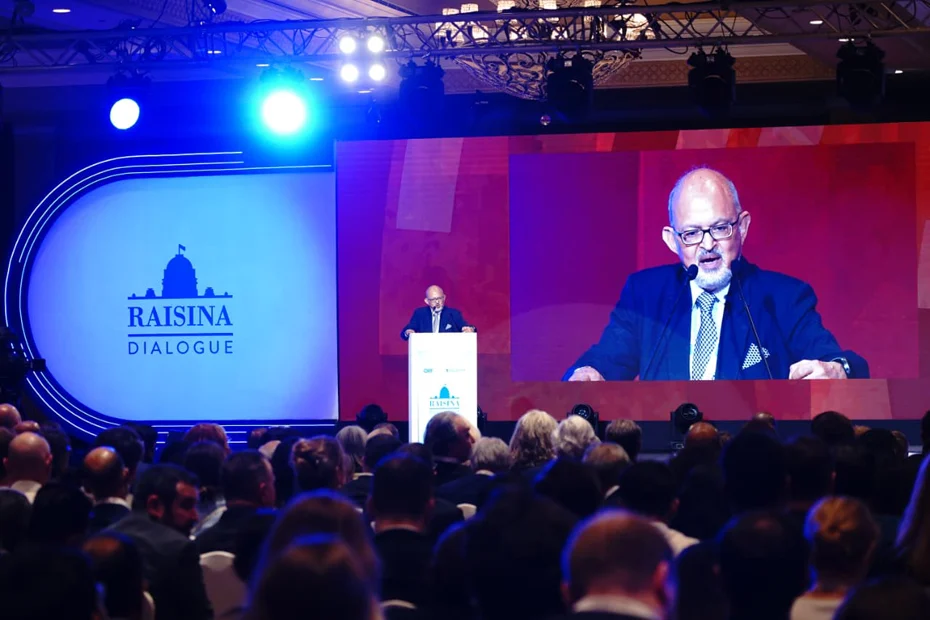
The Australian Strategic Policy Institute (ASPI) and India’s Observer Research Foundation (ORF) are hosting the inaugural Raisina @ Sydney Dialogue to discuss the Australia-India relationship, and how the two countries can further deepen their close collaboration and contribution to a free, open and prosperous Indo-Pacific. Raisina @ Sydney will involve ministerial and high-level government representation, as well as industry and civil society participation. It will include panel and keynote speeches with leading regional thinkers on geopolitics, technology and economics. With India chairing the G20, Raisina @ Sydney will be a G20 outreach event that leads into the G20 Ministerial meeting on 1 March in New Delhi, India. The event will bring together, and build momentum for, two of the Indo-Pacific’s influential foreign policy, security and technology dialogues—the Raisina Dialogue in New Delhi from March 2-4 and The Sydney Dialogue on April 4-5. Raisina @ Sydney will take place on February 18, 2023.

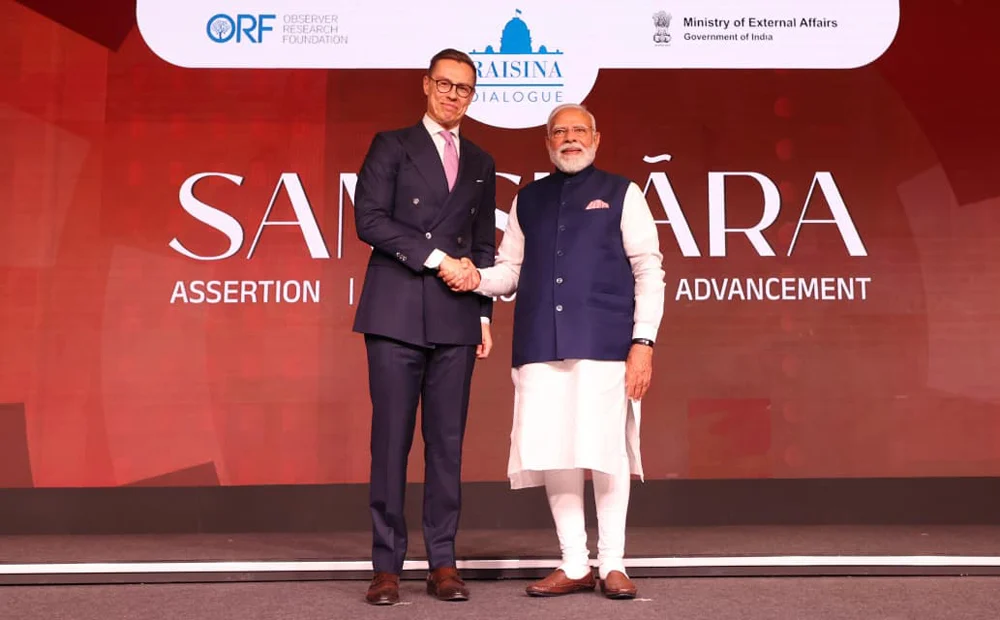
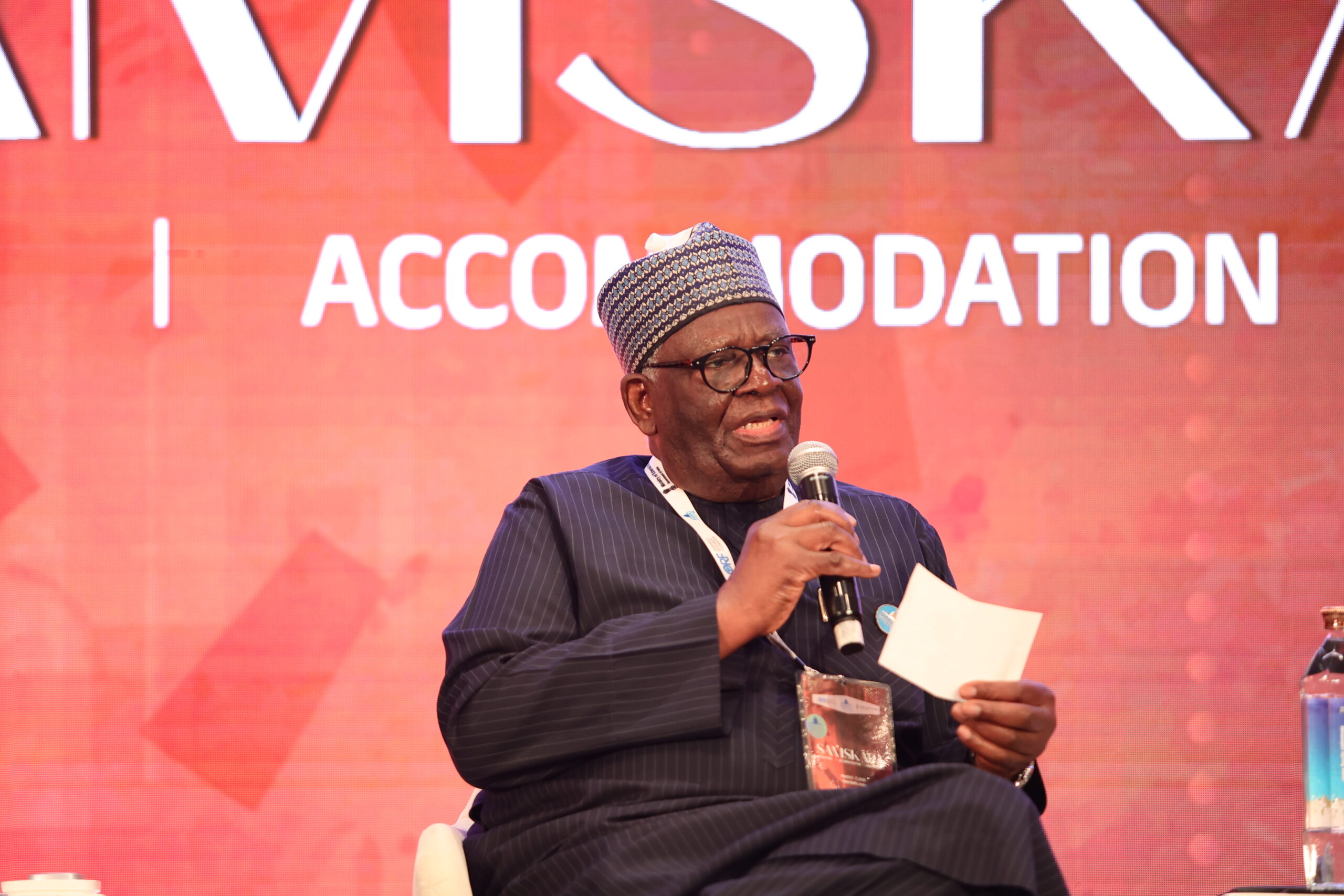
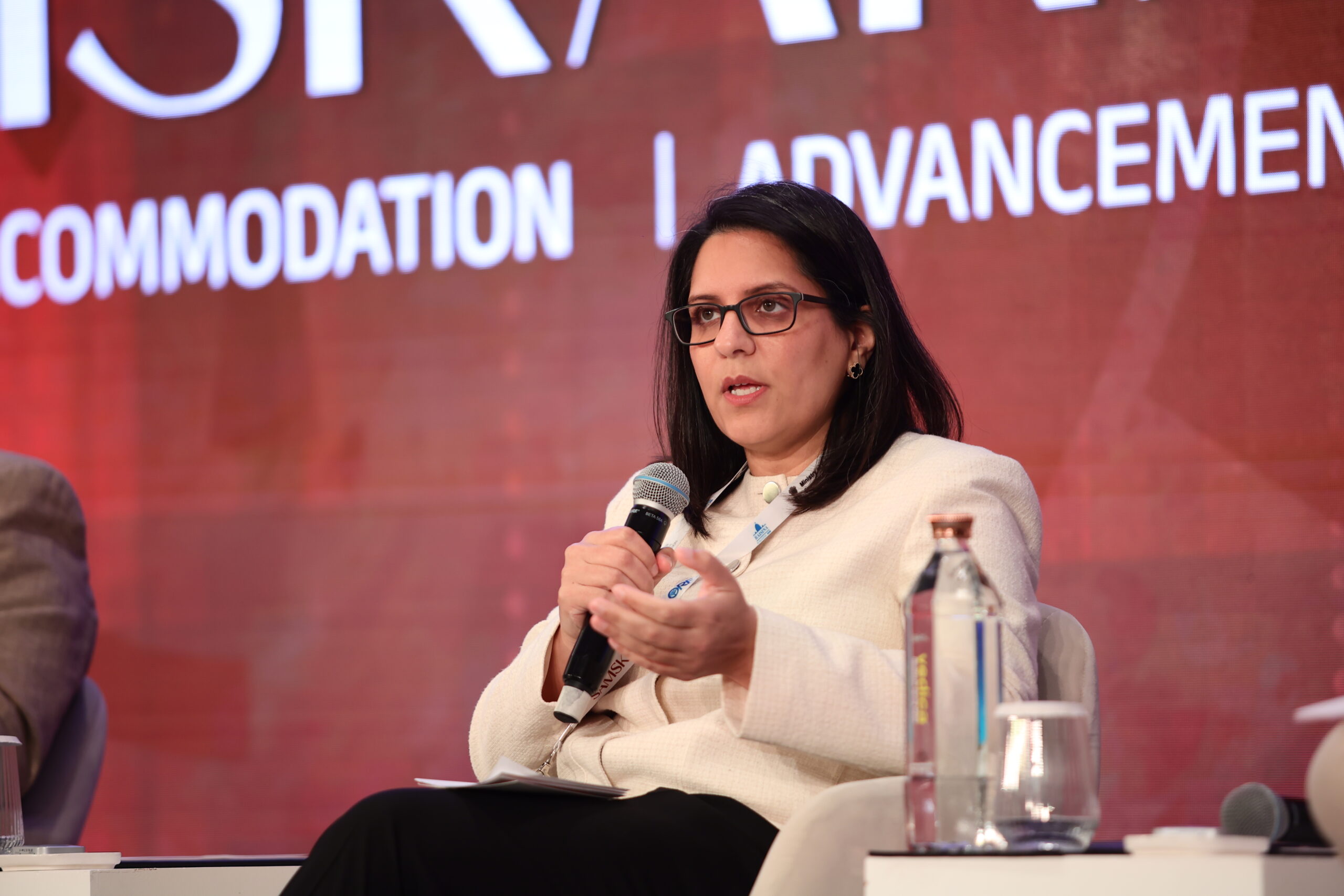
Saṁskāra, in its deepest essence, is a civilisational tool, a statement of continuity. It is the inheritance of meaning that allows societies to assert their truth, accommodate their contradictions, and advance through refinement. Today, nations are asserting sovereignty over borders and bandwidth alike — claiming their right to shape their economic futures, digital destinies, and industrial ambitions. This era of assertion marks a shift toward greater autonomy, but alongside it comes a quiet current of accommodation. Across continents, new coalitions are emerging — agile, interest-driven, and plurilateral — replacing a multilateralism where consensus has stalled. New norms are being shaped, grounded in shared interests rather than universal agreement.

Meanwhile, technology and governance are advancing their reach, bringing services, infrastructure and opportunity to long-underserved regions and communities. Four conversations define the world in 2025. Between America and the world, seeking to repair and re-establish dominance; between China and the world, in order to end or instrumentalise an economic asymmetry; and between the US and China, in a search for a new symmetry. But the fourth, between the other powers of the world, great and small, is perhaps the most consequential. It is a conversation about renewal over retreat, one that seeks to restore balance to the world – a conversation about structure, not merely about power. Where the old order splinters, new bonds form; where

Stay tuned for Raisina Dialogue 2026—fresh perspectives and new debates await!
Thematic Pillars

Contested Frontiers: Power Polarity and Periphery

The global order is unsettled: Power is diffusing, polarities are shifting, and regions once peripheral have staked their claim to centrality. Resources are contested, technologies both miraculous and menacing, and the guardians of order are being outflanked by new actors and new theatres of conflict. New forms of war upend the consensus on how best to defend societies. Global commons — from oceans to orbits, from supply chains to cyberspace — have become global battlefields.


This pillar confronts the persistent shadow of conflict that hovers over the global landscape. Old threats mutate, new ones multiply, and frozen conflicts may burst aflame at any moment. The security order must be recalibrated to confront not only terror and ideology but also the technologies that enable them. Threats no longer lurk at the margins but pulse in civilisational centres, from divided societies to contested cyberspace, from the borders of Europe to the heart of Africa. How we navigate today’s storms will determine the shape and safety of the harbours we eventually find.

The global compact that supported the postwar order is fraying. The institutions that gave it life – the UN, the WTO — are struggling to serve a multipolar world. In this vacuum, agility replaces architecture. The world is being rewired — through mineral corridors, maritime linkages, and digital highways. South-South solidarities and new plurilateralisms are displacing old frameworks, creating flexible, interest-driven coalitions to shape global governance where consensus has stalled.


This pillar examines the connective tissue of the emerging order. India’s recalibration — from BRICS to IMEC to the UFI trilateral — underscores a new strategic grammar. The Global South is no longer a constituency, it is a coalition, a force multiplier for a fairer order. In this fluid landscape, India is not a balancing but a builder, creating new structures for leadership, resilience, and shared growth.


In a world diverting resources to security from solidarity, how can development aspirations be met? As 2030 draws ever nearer, ambition must give way to accountability. The Sustainable Development Goals, set in 2015, are facing a crisis. Progress has stalled, funding fatigue is visible, and planetary limits are closing in. The question now is not what was promised, but what can still be delivered.


This pillar asks what will take to recentre development in the global order. Can technology bridge gaps that politics has widened? What does gender equity mean in a digital, postpandemic economy? What do the world’s young demand beyond rhetoric? Most importantly, can development survive in a world defined by division and self-absorption? If not, what must a post-SDG compact look like — one grounded in realism, reciprocity, and responsibility?

Across the world, nations are moving from pledges to action and accountability. Countries are putting into place the institutional systemic changes needed to finance and withstand the shock the future may bring. Green finance and investment are moving across borders, but not at the rate needed; governments, despite the uncertainty, are seeking to ensure that the supply chains that determine future prosperity are safeguarded.

In the absence of a worldwide consensus, emerging economies, on the frontline of the transition, must perforce assume leadership. They seek to design resilience, reduce harm, and adapt to what is already inevitable. The challenge is both moral and material: to replace apathy with agency, to turn the cost of delay into a call for action.

Power today flows through the lines of an algorithm. Code defines identity, data dictates geopolitics, and AI shapes the wealth of nations. Technology is fast outpacing the ability of states to regulate it. We already know technology will shape us – but will we have a chance to shape technology first?


This pillar explores the evolving architecture of digital governance — the clash of regimes, the race for innovation, and the ethics of autonomy. Technology is redefining truth, work, and even personhood. The world must craft oversight that is agile yet anchored, inclusive yet secure. Progress may never be slowed, but it might still be steered to ensure that the machine serves humanity and not the other way around.

Electorates everywhere have demanded sovereignty over their economies. In response, nations are moderating their commitment to globalisation, recommitting to industrial policy, and asserting their right to self-reliance. Yet what could merely be fragmentation has also brought forth innovation. Nations are diversifying their partnerships and rethinking value creation beyond the traditional hierarchies. Constraint is breeding creativity.


This pillar studies the evolving map of global commerce. The old hierarchies of trade are dissolving, replaced by dynamic partnerships that balance competition with cooperation, sovereignty with interdependence, self-reliance and shared growth. Progress, as ever, is born not in ease but in effort — not despite adversity, but because of it.

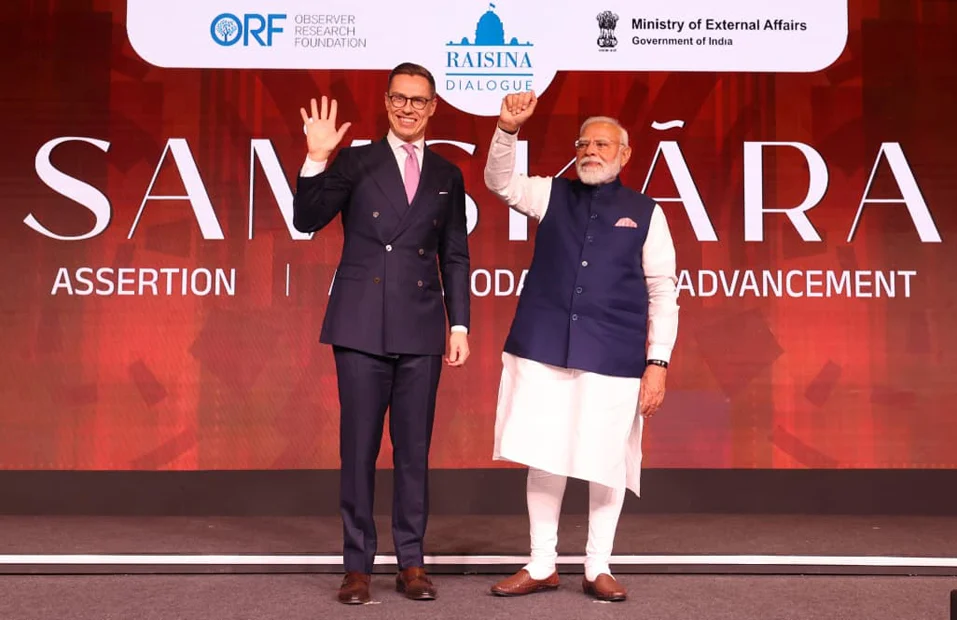
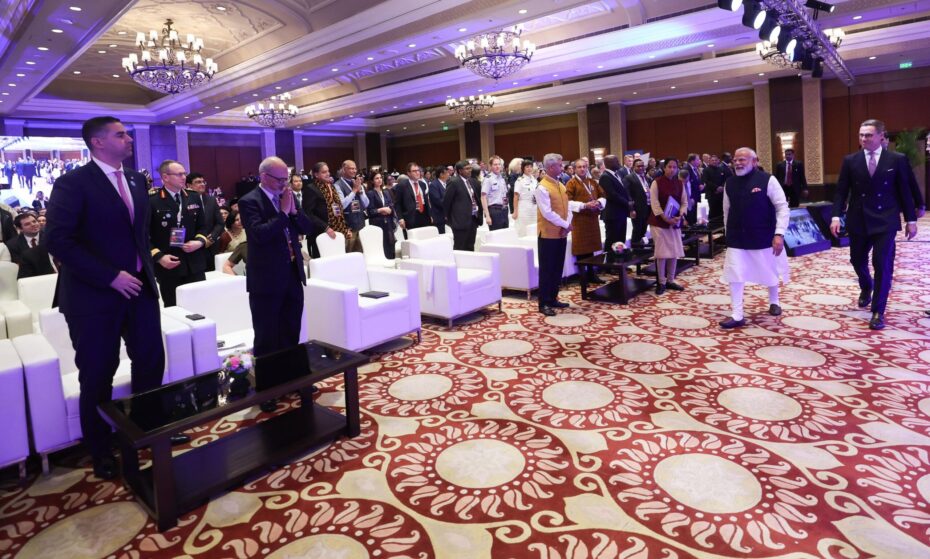
Inauguration

1772530097_modi
Narendra Modi

Prime Minister of India

1772530155_alexander_stubb
Alexander Stubb

President of Finland

Curator

Samir_Saran.jpg
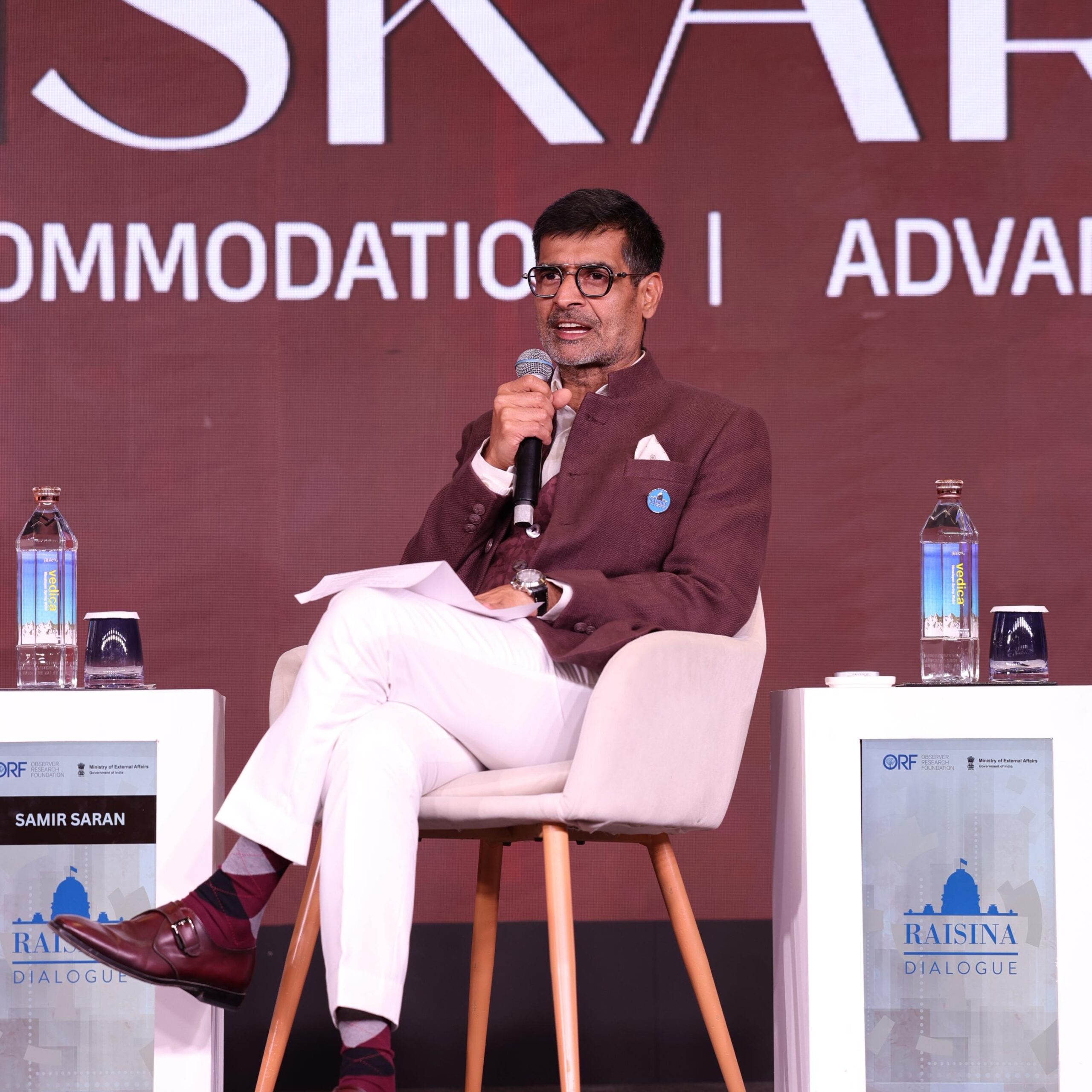
Samir Saran

President, Observer Research Foundation, India

Hosts

6599a100f10f4
Justin Bassi

Executive Director, Australian Strategic Policy Institute, Australia

Samir-Saran-President (1)
Samir Saran

President, Observer Research Foundation, India

Speakers

1727696357_Sujan-1
Amb. Sujan Chinoy

Director General, Manohar Parrikar Institute for Defence Studies and Analyses; Chairperson, THINK-20 India 2023

1727696322_Bec
Bec Shrimpton

Director, Australian Strategic Policy Institute, Australia

1727696296_Danielle-Cave-1
Danielle Cave

Director, Executive, Strategy and Research, Australian Strategic Policy Institute, Australia

1727696267_Hon-Chris-Bowen-MP
Hon Chris Bowen MP

Minister for Climate Change and Energy

Partners

Publications

No posts found.

Video Playlist